Showing posts with label Health Care. Show all posts

Tuesday, August 19, 2008

Stockholm Hosts World's Biggest Water Fight


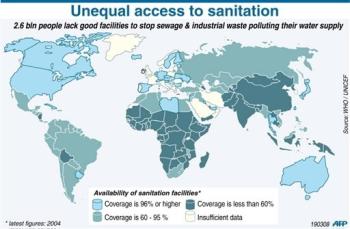
It's another conference about water, mainly everybody's waste water. Much of the world's population, 2.5 billion people go to the bathroom leaving behind much of the water unfit for human use because a toilet does not exist. An epidemic of over 1.4 million kids die all over the world from diseases directly associated with the lack of clean water, year in and year out. Everybody needs to get a little pissed. With over 2500 water experts from 170 organizations debating and discussing the issues of fresh water, sanitation and hygiene in Stockholm, its bound to get a bit tense over a lack of urgency on issues related to water. That is happening at the World Water Week again in Stockholm this year at the annual conference. Most of the globe's population remains oblivious that conservation is about to take over all our lives as water resources dwindle and issues about who controls it makes the world military powers have itchy trigger fingers.
"We've had a luxurious lifestyle during the last 25 years, not caring at all about the environment. It's necessary to change the way people consume, buy, eat," said British professor John Anthony Allan, winner of the 2008 Stockholm Water Prize.

Almost half of the world's population lacks proper toilet facilities, a situation
that can have dire consequences on public health and which poses a challenge to resolve since water is becoming an increasingly
scarce resource.

"Sanitation is one of the biggest scandals of all times. It's something that we have to put on our radar screen," insisted Prince Willem-Alexander of the
Netherlands, who heads up the UN Secretary G
eneral's Advisory Board on Water and Sanitation. (Photo Prince Willem-Aexander)
Biofuel discussions are causing mental meltdowns as many scientists urge people to eat less red meat. Even in the US, vegans versus vegetarians versus carnivores is no joke as animal waste is causing massive food recalls from outbreaks of E coli and other waterborne diseases. Royals are piping up all over the world on food and water issues. Organic farmer, Bonny Prince Charles himself went nuts over genetically modified foods, calling them an environmental disaster and an experiment gone seriously wrong was roundly criticized for his remarks.

The conference will also look at the problem of increasing water stress throughout the world in the wake of global warming, with climate scientists estimating 1.8 billion people will be living in regions with absolute water scarcity by the year 2025. High on the agenda will be the effect human beings are having on the world's climate.

"We have to understand that what we eat and the products we buy have an immediate implication for the availability of the world's water resources," Blenckner said.

Plus this:

A British professor, John Anthony Allan, said the effect of the growing use of biofuels "is too frightening to even begin to realize."

Allan, 71, of King's College, London, was awarded the 2008 water prize for his concept of "virtual water," which measures amounts of
water used in the production of food and industrial products.

He also urged people to cut down on meat consumption, saying it was "bad for the environment."

"Nonvegetarians consume five cubic meters" or 176 cubic feet, "of water per day; your bath is a tiny puddle compared to that. It is the water for food that is the big problem," Allan said. "Be rational and eat less meat."

UNICEF declared 2008 the International Year of Sanitization. In western nations with sewage infrastructure in place, the unpleasantness of being human and the disposal is taken for granted on a large scale. Almost 40% of the world's population does not have the same luxury, leading to shortened life spans and a drain on everyone's resources for aid and large migrations of people fleeing war torn areas as fights over perishing fresh water continue in earnest. Nobody is shying away from the tough stuff at the conference either. India, China and Vietnam regularly use waste water in their agricultural practices. Just don't expect something so important and basic to get carried on the US evening news.

The meeting, which opens Monday and is entitled "Progress and Prospects on Water: For a Clean and Healthy World," will focus in particular on the dangers that the lack of adequate toilets and hygiene facilities presents to 2.6 billion people.

"It's not very popular to talk about toilets and excrement and where to go when you are menstruating. This is something that makes people feel uncomfortable," Stephanie Blenckner, spokeswoman for the Stockholm International Water Institute that is organising the event, told AFP.
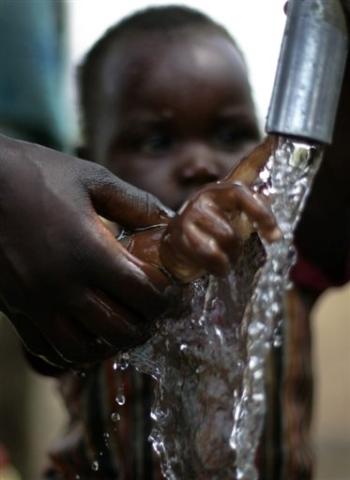
Last year's post: World Water Week in Sweden Affects Us All. This year's annual water fest ends 23 August, 2008. Mark your calendar's Global Handwashing Day is 15 October, 2008 for the entire world. Everyone must have clean water to wash their hands.

Monday, August 4, 2008

More Costly Pills, Less Time Talking

Talking it through, over it or around it is not the first option for more psychiatrists in the 21st century. Pills targeted towards specific areas of the brain, psychometric drugs are the new remedies favored by the shrinking class. Scary on multiple levels, but especially since all the pill residue ends up in the drinking water of innocents with other issues.

Psychotherapy since father Freud has undergone profound evolution with the profession now in a pill revolution. In less than ten years since 1996, psychotherapy has gone from about half of the treatment options to less than 30% with the embrace of the pills. At some level of good or for ill (and of course, capitalistic profit motives), Big Pharma has offered a profuse array of colored pills to all manner of specialties in medicine. Mental problems, here's a pill, is something that has pernicious overtones as emergency practitioners may have no idea what mind altering drug someone is taking or what the effects of mixing certain compounds. But an uglier disturbing truth is its all about the money that the pill pushers make. Same economic truth works for Big Pharma as buying crack on the corner. The person that cuts the inefficiencies in the supply chain and controls distribution makes the most money.

"These trends highlight a gradual but important change in the content of outpatient psychiatric care in the United States and a continued shift toward medicalization of psychiatric practice," wrote Drs. Mojtabai and Olfson.

In an interview, Dr. Mojtabai said financial incentives are probably driving the change.
He said that under typical reimbursement rates, a psychiatrist who conducts one 45-minute psychotherapy session will receive 40% less than if he or she saw three patients for 15-minute medication management visits.
It leads to an awful discussion on medical records. If people know what kind of drug your taking, then its a small matter of inference and deduction as to what internal malady one may suffer from. There has been a huge publicity around medical professionals snooping inside medical records. Prescription Pills make that much easier because they go down so well with the TV marketing campaigns that brainwash so many viewers.
As talk therapy declined, TV ads contributed to an "aura of invincibility" around drugs for depression and anxiety, said Charles Barber, a lecturer in psychiatry at Yale University and author of "Comfortably Numb: How Psychiatry is Medicating a Nation."

"By contrast, there's almost no marketing for psychotherapy, which has comparable if not better outcomes," said Barber, who was not involved in the study.

Read the book, Comfortably Numb: How Psychiatry is Medicating a Nation, then really decide whether the latest pill shortcut is in your best interest. Charles Barber cites several studies and gives some astounding insights as author of this book. The particular title of that book seems to be very popular.

PS Ack! Blogger is freaking out and not letting images upload. will put them in later. I need a pill...

Sunday, June 15, 2008

Vitamin D: Healthy Living On Sunshine

It's the free super drug that Big Pharma can't steal - sunshine. Solar rays provide healthy helpings of Vitamin D, which another study shows potential reductions in the risk of heart disease, cancer and diabetes. In less than a week two studies showed similar results. Men who are Vitamin D deficient double their risks of a heart attack. Judiciously use of Vitamin D helps bones in the very young by stopping rickets or in the older - especially women by protecting against osteoporosis. Vitamin D touches so many internal body functions with the gift of good health, it is jaw dropping how many millions of people are deficient of something that many can get just by getting off the couch when its light out.
The findings join a growing body of evidence indicating that an adequate level of the vitamin, which many people can get from 20 minutes in the sun, is crucial to maintaining good health.

Not every scientist agrees that vitamin D is so crucial to well-being, and there is controversy about what should be considered an adequate level of the compound in the blood. But sentiment is gradually shifting toward a higher intake.

"We don't have a cause and effect relationship here yet" proving that higher doses of vitamin D prevent such diseases, said biochemist Hector DeLuca of the University of Wisconsin, who was the first to demonstrate how the vitamin interacts with the endocrine system, which manages the body's hormonal balance.

Vitamin D absorbs calcium and makes strong bones are among its most well known benefits. Deficiencies in Vitamin D are common with those with a rheumatic disease, like arthritis. Sunshine is one of the most cost effective means to acquire Vitamin D. Risks exists to skin with too much sun exposure without benefit of sunscreen. Health benefits accrue from a full compliment of Vitamin D in international studies. A rise in Heart Attacks in men without enough Vitamin D is the assertions new studies are making with great success. Fortified Milk, fish is a great source of Vitamin D on those cloudy days or when its deep in the winter doldrums too.
Key is knowing when to get out of the sun so as to maximize its benefits without the other risks from prolonged sunlight without appropriate protection. That's pretty important as some people spend too much time getting faux tans in tanning beds rather than spraying it on in an assortment of orangey colors. Best of all world is getting a little sun regularly for a really healthy glow.

Sunlight striking the skin converts to Vitamin D then starts to lift spirits, wards off cancer, lupus and bone ailments. Add a small amount of exercise in the sunlight for a short duration on a consistent schedule and a healthy lifestyle could just start blooming. Getting a vital nutrient in a homeopathic way just by catching a few rays, rather than popping all the pills drug companies want to inflict on people has financial rewards too.


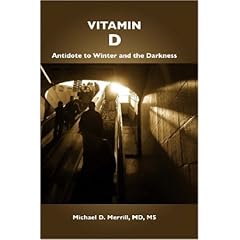
Examining the multitude of ways Vitamin D can improve ones health is in the book, The Vitamin D Cure from James Dowd and Diane Stafford. Focusing on the seasonal effects and his own story is Dr. Michael Merrill in his book aptly named Vitamin D: Antidote to Winter and the Darkness.


Most importantly Happy Father's day to my daddy, a great person with an infectious big laugh who gave me the most meaningful insights for the life ahead. My thanks and all honors go to my parents, the dream team. Thank you Daddy for All, forever. j

Saturday, April 26, 2008

Malaria Madness

From Abuja Nigeria and the war torn killing fields of the Democratic Republic of the Congo to cash strapped Sri Lanka across a besieged Nepal through Sarangani - a province of the Philippines, one million people drop dead each year from Malaria. A child dies every thirty seconds from the parasitic disease for lack or want of a mosquito net. Ban Ki-moon, Secretary General of the United Nations announced during yesterday's first ever World Malaria Day that he wants resources dedicated to eradicating the malicious disease by 2010. It does have the unfortunate, yet useful acronym of WMD.
Cameroon on Friday celebrated the first World Malaria Day at Nanga Eboko, a small town located at about 170 km East of Yaounde.
In Cameroon, malaria is the topmost cause of morbidity and represents 40% of medical consultations, 23% of hospitalizations, 26% of sick leave and 40% of the annual health budget of households, according to a survey conducted by the National Statistics Institute.
For 50,000 years malaria has plagued the planet and within the last 10,000 years increased its killing efficiency and impacted quality of life. Mosquitoes adapt and ward off man made chemicals like DDT wherein the environment and people suffered long after the spraying when it was used. Because of the prevalence of malaria in Europe until a few centuries ago when the earth cooled in the Little Ice Age, old English written works by a bard, Shakespeare, called it the ague. The advent of increased temperatures and standing pools of water where logging, farming or ranching eradicated forests increase the blood thirsty infected female mosquito population to descend upon people who have moved into these areas. Quinine was the first remedy known to take on the blood disease and those suffering pigmented bodies.

From all over the world, a half billion people suffer an outbreak of malaria each year. Most vulnerable to malaria induced anemia are children and expecting mothers. The number of deaths is pegged at one every thirty seconds just from malaria because many cases are unreported from remote and rural areas. The majority of deaths are in sub-Saharan Africa but on the rise elsewhere in outlying areas of Vietnam. Latent parasites can reside in the liver causing relapses of the disease years later or certain types cause chronic malaria. Mental impairments occur from the raging high fevers induced by the disease's onset in children. The United Nation's leader wants the tropical disease, malaria, eradicated globally in less than a thousand days.
Children who are younger than 5 are particularly exposed to the disease. Protecting them is essential. A program is expected to be launched in the fall to immunize children.

"This treatment is part of a new preventive strategy," said
Cheikh Sokhna, of the Development and Research Institute. "It will be
applied to 100,000 children who live in high-risk zones."

The new treatment has been largely financed by the Bill and Melinda Gates
Foundation, which donated $3.9 million. It has already yielded spectacular results in the town of Niakhar, where the mortality rate from malaria decreased by 86 percent. "The aim is to see whether this can be repeated on a larger scale," Sokhna told Agence-France Presse.

"I am convinced that people can live with malaria without dying, thanks to better access to health care," said Sokhna.


Randall Packard studies the history of malaria and its origins from very surprising beginnings. The book winds its way through the complexities and scope of the challenge to outlining some global policies to finally start eradicating this malicious and pernicious disease. The well recommended book from the John Hopkins Biographies of Disease series is The Making of A Topical Disease: A Short History of Malaria.

Sunday, March 23, 2008

A Day and a Year Dedicated to Water


Water holds the meaning of life. March 22nd is an annual dedication from the UN for World Water Day. A nation's quality of life and measure of economic success depends on how big and how clean is their water supply. Few understand where their water originates, whether the source of it is an ancient aquifer or the cool fridge dispenser with cube or chip ice options.

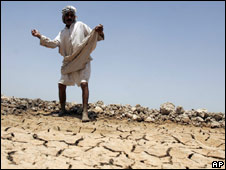
Clean water is increasingly difficult and expensive to find consistently across the entire planet. Just last year in the US state of Georgia, the Governor held a Prayer Vigil to seek God's help in granting Rain as 3,000,000 people in Atlanta were down to the last month of their water supply. Lake Chad was once a vast visible water source on 4 nations' borders, now it is a dilapidated and polluted puddle, virtually inaccessible from war torn Darfur where potable water is everything in maintaining power during a drought. The United Nations states more than 1 out of 6 people on Earth have little to no access to clean drinking water. Where is our political will to make clean water a human right?

Mighty nuclear power nations are finding water issues that are close to making them helpless in the face of shortages that will put the economy in shambles. China literally moved the Yellow River so their would be enough water in Beijing just for the 2008 Olympics. The US has a looming crisis in the Western region as one governor proposed taking water from the Great Lakes which have been hit with severe drought conditions. Pakistan is desperate to build dams for urban dwellers, industry and power supply, but it diverts water away from farms, livestock and its indigenous peoples. Every dam project or public private partnership involving water touts dramatic water improvements and smaller operating costs which never quite turn up as rate decreases; see China's Three Gorges Dam or Libya's multitude of Islamic Green pipes for an underground river that trickles along at best.
Water and Power Development Authority (WAPDA) member Muhammad Mushtaq Chaudhry said that the Mangla Dam raising project would be completed by September 2008. He said that the construction of Mirani Dam, Gomal Zam Dam, Subakzai Dam and Satpara Dam would be completed by 2009.

He also claimed that the country would overcome the water-shortage problem if the new government announced that it would construct three new mega water reservoirs.

Only a few decades ago, Pakistan was considered to have an abundance of quality water, but a recent World Bank report stated that Pakistan was among the 17 countries that were currently facing a water shortage and its reservoirs would drastically decrease in level by 2025. Moreover, Pakistan is currently close to using all its surface and ground water, but it has also been projected that over 30 percent more water will be required over the next 20 years to meet the increased agricultural, domestic and industrial demand.
Causes are many on the looming water crisis. It takes 100 tons of water to produce one ton of grain. Mix in droughts that are shredding the US, Africa and Asia and food security for the world is at stake. Saltwater seeps into fresh water supplies rendering valuable agricultural lands worthless as oceans infiltrate inland. This occurs at faster clips in Florida, Louisiana or Indonesia after the tsunami and other locales bordering Oceans or where wetlands are eroding due to over development or global warming. No one is immune.

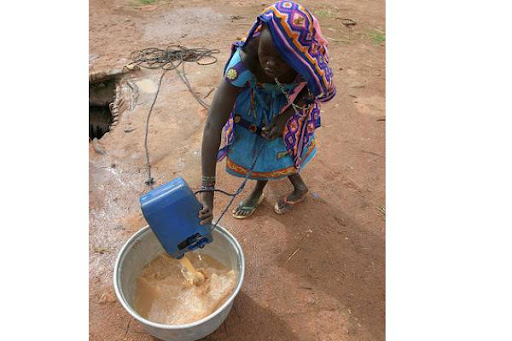
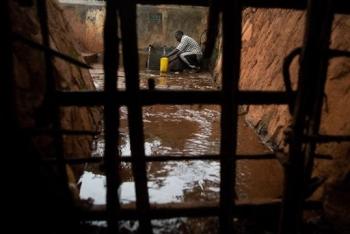
The crucial need for fresh water and better sanitation led the UN in 2006 to make 2008 The Year of International Sanitation. Access, just access, to clean water is one of the Millennium Goals. Over 2.6 billion people do not have acess to adequate sanitation leading to waterborne diseases or diarrheas, reduction of clean water and blindness. In impoverished war torn places, women seek privacy late at night for toiletries, leaving them open to repeated violent attack or harassment during daylight hours when fetching water filled with animal waste for their families. Something as simple as toilets protect so much more and give people a sense of their dignity back. Sanitation would be an investment that immediately pays off in increased standards of living and protection of precious water supplies.

Diarrhoeal disease is a leading cause of death and illness, killing 1.8 million people each year. Poor hygiene and lack of access to sanitation together contribute to 88 per cent of all deaths from diarrhoeal disease, with children paying the highest price: 5,000 deaths a day. Hundreds of millions of other children suffer reduced physical growth and impaired cognitive functions due to intestinal worms.

Improved access to sanitation would also lead to very high avoided health sector costs, according to UN research.

On a typical day in sub-Saharan Africa, for example, half the hospital beds are occupied by people afflicted with faecal-borne disease. Treating preventable infectious diarrhoea consumes 12 percent of the region's total health budget.

Around the world, an estimated 200 million tons of human waste and untold millions of tons of wastewater are discharged uncontained and untreated, into watercourses every year. As a result, humans are regularly exposed to bacteria, viruses and parasites -- spread through direct or indirect contact with these watercourses. Such exposure is the leading cause for diarrhoeal disease (including dysentery and cholera), parasitic infections, worm infestations and trachoma.

A burden are burgeoning populations where water is scarce. In the Middle East and other developing areas where the population is younger with more people of child bearing age are putting tremendous pressure on shrinking resources. Water is more precious than oil and as nations hurry to develop more water is required - but at what expense?

Friday, March 14, 2008

Aspirin Miracles

Aspirin has magical powers and is rapidly approaching parity with the apple in An Aspirin a Day will Keep the Doctor Away. Or something from olden times when a polished apple was a gift to the teacher. Imagine an earnest kid putting an aspirin on the teacher's desk in today's world, especially since the original aspirin was powder. A daily aspirin contains keys to warding off heart attacks, blood clot formation, decreases stokes in healthy women, soothes headaches and other maladies. Now, the mighty aspirin is dominating studies showing potential to ward off the development of asthma in older women. A study showing similar results from aspirin for older men came from the same researchers.

"These two studies are not sufficiently strong to make a recommendation for primary prevention of adult-onset asthma," said Dr. Tobias Kurth, who was involved in both studies.

For the many older adults already taking[sic] aspirin for its salutary effects on heart health, "this could be an added benefit," he added.

The incidence of asthma is on the increase, possibly due to obesity, dietary factors, exposure to antigens and environmental factors. But the trend also coincides with a decreased use of aspirin as people have switched to other over-the-counter pain relievers, or have avoided aspirin use in children due to concerns about Reyes syndrome.

Aspirin has a controversial history that rages today at symposiums on the who really discovered its compound as well as a range of off putting or even fatal side effects in some people of all ages. Yet, aspirin retains its power to ward off the evils of inflammation, reduce fevers and moderates bothersome aches and pains.

It is being hotly debated as a cancer inhibitor in modern medicine and the peer reviews are tough, but so is the tablet, caplet, capsule made of aspirin. The general compound is a lifesaver too and aspirin also has rewarding uses for some of the same maladies in cats and dogs.

Way back in the day, when Cleopatra roamed the Earth, medical personnel for Pharaohs and other antiquated Poobahs, used a form of salicylic acid. Fast forward a couple thousand years to 1853, and a French chemist made acetylsalicylic acid which became the more pronounceable, yet trademarked and copyrighted name in 1899 for some small German outfit.

Bayer swallowed the cash, especially when aspirin turned into pills in 1914. Aspirin's trademark was stripped from Bayer as the spoils of war due to Germany being on the totally wrong and losing side of two World Wars.


Today's study shows the roots of a natural substance being refined in modern times to make health maintenance as easy as taking a daily aspirin. what an analgesic that continues to stir the passions of the medical community and scientists as well as big pharma hoovering up all the profits it can. Studies continue to show the healthful effects of aspirin in both men and women inspire further study because we need more Miracles.


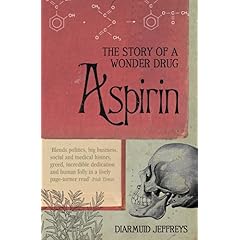
For the behind the scenes history, science and medical mysteries and myths of aspirin read the astounding nonfiction thriller, Aspirin: The story of Being A Wonder Drug by Diarmuid Jeffreys.


Happiest of Birthdays, Daddy! Luv ya forever! Your spirit is in my heart and guides my way. Thank you Both for everything - Dad & Mom.

Monday, March 3, 2008

The Breakfast Diet Keeps the Weight Off

A few flakes of corn or wheat, add a couple of slices of a banana or sprinkle some berries around splashing on some milk or take steaming hot from the nuke chamber a ceramic bowl filled with oatmeal and raisins or even go au naturel with the crunchiest of homemade granola, fruit and slurp fresh squeezed orange juice, pulp and all, and the result is teenagers most of all have an inbuilt mechanism that controls weight gain. People spend billions of dollars a year trying to find the magic weight loss recipe. Another study proves again, a simple regular affair every morning, such as breakfast keeps the weight off, especially for teens. Cereal through the lips, keeps weight off da hips should be the high school cheer.

"There's a pretty significant inverse association between how frequently kids report eating breakfast and how much weight they gain over time, and we took into account other dietary factors and physical activity," said Mark Pereira, co-author of the study, published in the March issue of Pediatrics.

"It's interesting to note that the kids who eat breakfast on a daily basis overall have a much better diet and are more physically active," Pereira said.

Added Dr. Peter Richel, chief of pediatrics at Northern Westchester Hospital Center in Mount Kisco, N.Y.: "Grandma and Mom are right. When we skip breakfast, especially in the teenage years, then kids tend to snack and graze."

An estimated 12 percent to 34 percent of children and adolescents skip breakfast on a regular basis, a number that increases with age. Previous studies have linked breakfast skipping with a greater tendency to gain weight.

Stop skipping the breakfast of champions, the magically delicious, and the floating O's made of honey nuts and oats. For weight conscious teens, the incentive is built in and keeps them healthier longer. Not to mention more alert and less lethargic, acting as if they were seventy years past their prime. For those with a bit more time and resources the choices of having a hot meal in the morning complete with hot cakes and other griddle delights keep you away from the horrors of the vending machines and more alert for the day's challenges. take it from someone whose father made a hot breakfast every morning for year. Thanks Daddy, you did a world of good!

The Project EAT study, titled “Breakfast Eating and Weight Change in a 5-Year Prospective Analysis of Adolescents: Project EAT,” started five years ago when study participants were adolescents. Now in their teens, those who ate breakfast daily are thinner and have a lower body mass index (BMI) than those that frequently skipped breakfast. BMI is a measurement used to determine risk of obesity.

Many people, including teens, think skipping breakfast is an effective way to limit calories but the opposite is actually true, according to Dianne Neumark-Sztainer, PhD, Project EAT’s principal investigator. Skipping breakfast leads to overeating later in the day, especially in the evenings.

No one should take this to mean that the stuff coated with frosting on cereal, bread, or with huge amounts of high fructose corn syrup on other donut enticements is a-OK. It's not. The onset of juvenile diabetes is reaching epidemic levels and being overweight to the point of obesity is now a common accepted recurring nightmare based on food choices made by price, not eating a nutritional breakfast or the level of sugar on the product that makes the unwary succumb to how bad it actually is after the sugar rush melts away. Eating products with a heart healthy and high cholesterol inhibitor, such as in the oat family is usually a great way to go.


Too help with breakfast, a book from about a young Korean teen who is just lost in teenage angst about how to make his lonely life work, especially in his neck of suburbia. David Yoo brings details that will make one wince and laughter to the teen saga, Girls for Breakfast. Reading and eating breakfast at the same time is GREAT!