Showing posts with label South America. Show all posts

Monday, October 27, 2008

Staying Sane Teaching Sticks as Drug War Rages

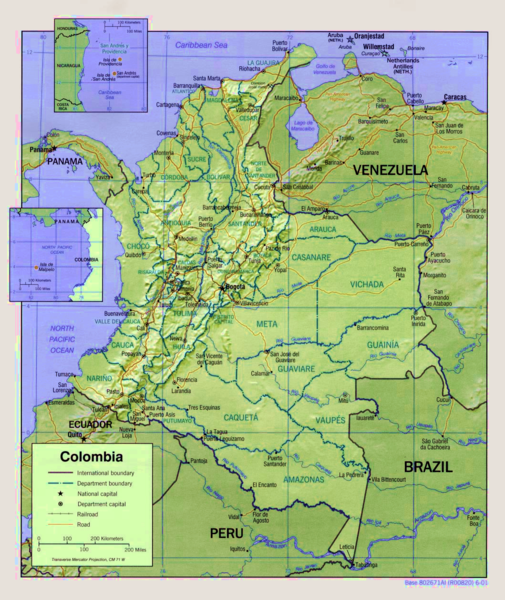
The Republic of Colombia is the 4th largest nation in South America birthed from colonialism and the name Christopher Columbus with two main warring factional parties with embarrassing fringe elements, Conservatives and Liberals. Mix in the profligate drug trade of highly lucrative cocaine and the mix is permanently combustible. Drug cartels, both Medellín and Cali, were world famous for their brutal kidnappings and torture.

The Andean foothills and the picturesque coast are where the majority of the population reside while the steamy tropical Amazon jungle portion is used to hide a multitude of sins and long held hostages.
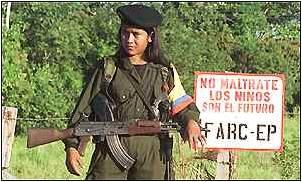
Fuerzas Armadas Revolucionarias de Colombia or FARC holds a four star terrorist tag in the US and in official Colombia, but not with Hugo Chavez's Venezuela or a Castro's Cuba because of their Marxist-Lenin communist origins inspired by Bolivar. Common cause was attempted multiple time with the cartels by rebel members of FARC.

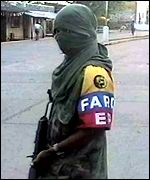
Today's FARC is below 10,000 guerrillas after a rampaging heyday controlling much of the rainforest and the production of cocaine. Bogotá citizens of import held another lucrative fundraising means, kidnapping for ransom. Except, when FARC does the kidnapping, it is for years or decade and the victim is forced to survive the most treacherous of environments while being chained like the neighborhood dog with nonstop beatings. FARC twin system of oppression forced juveniles, boys and girls, into servitude and hostages into submission. Hostages stumbling out of the territory into the civilization after years make for dramatic moments to crush the supposed invincibility of FARC. FARC-EP is up against a conservative president that is determined to cur off their supply lines and deploy the military to take back the country by driving the rebels deeper into ferocious foilage while decreasing their numbers by offering incentives for defections and assassinations. That lead to another miracle emerging from the depths of human depravity.
Oscar Tulio Lizcano, 63, escaped through the jungles, marching for three days with his FARC jailer before reaching an army post on Sunday where the guerrilla surrendered to troops.

His escape is the latest blow to the Revolutionary Armed Forces of
Colombia, or FARC, which has lost three top commanders this year as
President Alvaro Uribe's U.S.-backed military campaign drives rebels deeper into remote jungles.

"The loneliness was terrible. They were forbidden to talk to me," Lizcano, who once taught university classes, told Caracol radio. "I put sticks in the ground... and gave them names and taught them classes, two or three hours a day in classes, imagining I was in a classroom."
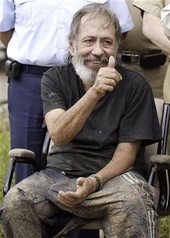
Earlier this year, FARC suffered more humiliation of the Colombian military rescuing hostages without a shot being fired by tricking them. American defense contractors held for five years were among those released alongside former presidential candidate Ingrid Betancourt on 2 July. This escape is a double whammy with the ex-FARC guard who aided congressman and college economics's lecturer Lizcano's escape after his 5 August, 2000 abduction, winning asylum to France with his paramour and a cash reward of just over $400,000 from the USA. France has been instrumental in seeking means to release hostages with the added incentive of Betancourt being a dual French citizen.

Lecturing stick students on World War I, Bolivarianism and Philosophy in an open air jungle amphitheater full of parasites, biting bugs and poisonous snakes was an innovative
way to pass the time and keep the mind working under terrible circumstances. Not allowed to speak to his baker's dozen of guards, even as they starved due to the disruption of their supply lines, the student sticks were his company for three hours a day. The occasional treat was a radio that played family messages on Sunday nights or the meal of heart of palm or sugar cane.

Meanwhile, Colombia is on an international charm offensive led by President Alvaro Uribe. The image is that Columbia is cleaning up its act - narco-terrorism and there should be every reason for the US Congress to approve the Colombian Free Trade Agreement according to conservatives. Strong on crime continues when Colombia seizes a record stash of ten tons of cocaine destined for Veracruz, Mexico, via Venezuela demonstrating a resurgent cartel system, when in walks one of the latest worst cases of human rights abuses in the rag-tag emaciated form of Oscar Tulio Lizcano. (Photo AFP/Getty)
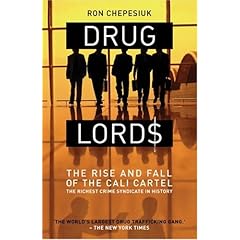

More people are familiar with the depravity of Pablo Escobar. Ron Chepesiuk brings the Cali cartels modus operandi into stark relief as they used guile and cunning to build a chilling corporate structure that too k more than twenty years and a twisted human wreckage to unravel. The book that lays it all out in painful detail is Drug Lords: The Rise and Fall of the Cali Cartel.


Tuesday, September 9, 2008

Attack of the Alligators

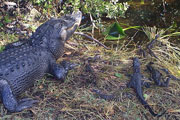
Drug runners in Rio de Janeiro went primal in intimidating their neighbors and shocked police raiders. Humans who ran afoul of the favelas' or slum hillsides' drug kingpins were fed sans ketchup to a pair of hungry caimans or alligators. Brazilian Police raided the home of the mother-in-law of a drug pusher only to get a rude backyard reception from the two man eating reptilian creatures. Skip the pit bulls and pythons, these new intimidating tactics get two in one by eating the victims and the resulting evidence. The gators are all the rage in Rio, a city known for Sugarloaf and the New seventh wonder of the world Cristo Redentor atop Corcovado as the stone replica overlooks beautiful scenery at Copacabana & Impanema beaches and abject poverty shunted aside on the hills.
Drug gangs in the city of Rio de Janeiro are known for their often brutal methods, but the police seem to believe their tactics for spreading fear are more unorthodox than previously thought.

Television images showed police officers carefully placing the caimans in the back of a truck.
One was almost 2m (6.5ft) long, although the other appeared to be much smaller.

Now a lucky local zoo is going to house the gators that ate some of their fellow citizens? Bounds of propriety and all, the US is known to kill wild animals and domestic pets that attack its citizens. It also would be relatively easy to get the caimans as the rainforest abuts many of the favelas giving cover to training and other imaginable horrors.


Ironically, the recruitment of Rio's drug runners often starts with a staple of the culture, a bailes or dance party sponsored by the current drug kingpins in groups nicknamed Red Command or Friends of Friends. In a schizoid scene, the slums are a stones throw away hanging right over a goodly few of Rio's Richy-riches. Violence is a way of life as people scratch for resources, clean water and a decent toilet finding a weird outgrowth of creativity in killing for the more ruthlessly Darwinian. During intense rains, landslides frequently remind the wealthy that the homes perched precariously above are built with whatever is at hand as the structures, favelados or people and their problems land in twisted gore at their well-shod feet. It is sad that the "quicknapping" tale of the man-eating gators will grow as the divide between rich and poor in Rio is not geographical, but socio economic with brutality practiced differently on each side of the divide.

Enrique Desmond Arios captures a bit of the history and growth of the favelas from policies, slavery and . His book Drugs and Democracy in Rio de Janeiro: Trafficking, Social Networks, and Public Security gives a grim view of the effects of the international cocaine market and its reordering of Brazilian society as a direct result of corruption, past slavery and the military dictatorship. Alligators may have been more civilized than anyone outside of the favelas knew. Ugh!


Saturday, August 30, 2008

Ancient Urban Cities Found in Amazon


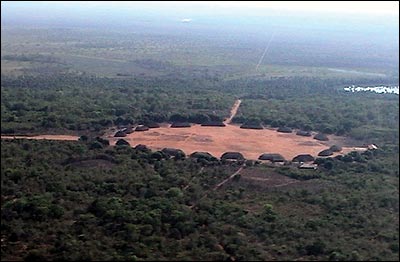
Imagine losing all sense of direction in São Paulo, Brazil a skyscraping vertical city brimming with well over 10,000,000 paulistanos or people. Makes it mush easier to understand how a series of antiquated urban complexes were lost throughout the ages under the density of the green foliage and trees of the interior of the Amazon's rain forest. People have traveled up and down the Amazon river for centuries seeking "lost" cities of gold, untouched civilizations or a place to hide amongst the anacondas, spiders and certain species of the fabled flesh-eating swarms of piranhas. (Science/AAAS, Claire Leimbach/Robert Harding World Imagery)

And no one has found lost cities in the Amazon forests. Twentieth-century anthropologists concluded there weren't any, believing that "urbanism" in pre-Columbian South America existed only in the Andes Mountains.

Scientists working in Brazil say hold on — they've found the remnants of several clusters of towns built as long as seven centuries ago.

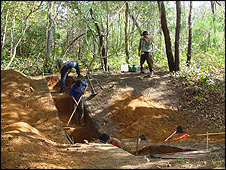
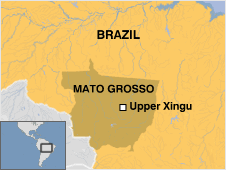
Michael Heckenberger from the University of Florida has been excavating in a region of the southern Amazon called Xingu.

"The real kind of head-ringer," he says, "is the fact [the villages] never occur alone."

Simultaneously, I am excited and kind of horrified. The Amazon rainforest already disappearing at a horrible clip to raise cattle and farms and build roads through the rainforest for biofuels is creating havoc with nature, the Earth's collong system and sustainability. More people will want to study the area's findings, meaning more degradation of the environment that the planet can ill afford. MatoGrosso has already lost half its trees as seen by satellite images. Pre-columbian finds in the upper Xingu River, a tributary that feed into the Amazon, are establishing a pattern of sophistication and organization that were not credited to the area until the rise of the Incas.

These finds whet the appetite for more knowledge of how they planned each city of 50,000 with specified areas for fertilizer or waste, roads on a northwest to southwest axis in each community and community plazas located in the center of town just like their ancient Greek counterparts. It opens up a breathtaking panorama of opportunity for speculative theorizing and upsets the scholarly applecart of some places claiming intellectual preeminence. Genetic markers will show the continuity of the people of the region.

"They have quite remarkable planning and self-organisation, more so than many classical examples of what people would call urbanism," he said.

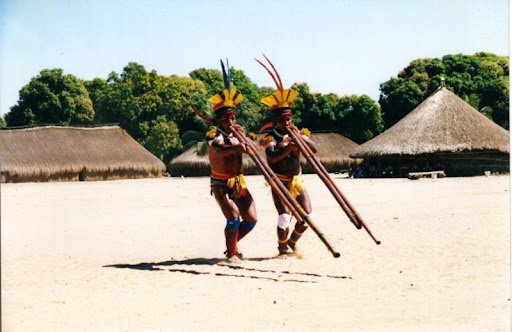
Although the remains are almost invisible, they can be identified by members of the Kuikuro tribe, who are thought to be direct descendents of the people who built the towns.

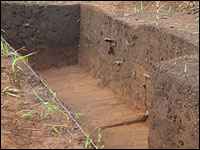
The tell-tale traces included "dark earth" that indicated past human waste dumps or farming, and concentrations of pottery shards and earthworks.

The researchers also made use of satellite images and GPS navigation to uncover and map the settlements over the course of a decade.

The communities consisted of clusters of 60-hectare (150-acre) towns and smaller villages spread out over the rainforest.
South America is becoming a bigger hotbed of archaeological finds supporting a quality of life better than historians estimated. More old myths of European superiority are crashing everywhere as the elimination of the tribes is thought to have happened with Europe's colonization efforts and the range of diseases they brought with them. The Brazilian anthropologists and a local member of the indigenous people had their proof of concept paper published in Science. Those who won the battles wrote the first histories and now the truth is starting to emerge more fully right before our modern urban eyes.


A true view and flavor of the Amazon's ecology and indigenous peoples can be found in Bruce M. Beehler's contemporary Lost World: Adventures in the Tropical Rainforest for less than $20US. It takes you to the rainforest without all of the bug repellent and gives the supreme rationales of conserving an area vital to the health and well being of 6,000,000,000 folks on our shared planet.


Wednesday, August 27, 2008

Mummy Season in Peru, Italy, Egypt


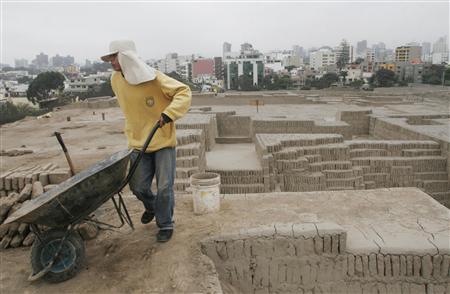
(Photos Reuters Mendivil)

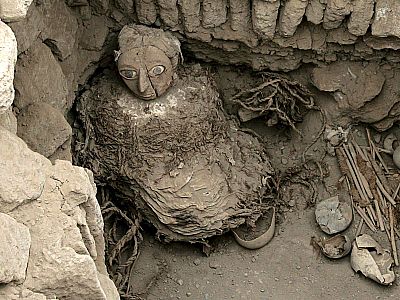
Ancient mummies from thousands of years ago capture attention in the midst of the modern world. Automatically, Egypt takes pride of place when mummy find announcements are made. But Peru is unraveling the conventional wisdom with the news that archaeologists in the middle of the capital city of Lima, have unearthed a 1300 year old lady mummy. Unraveling the intricacies of the pre-Columbian Wari culture uses these burial rituals will consume anthropologists for years. What stays consistent through the years are the human scavengers through out history that rob the tombs. sometimes its the professionals that consider them a find and put the treasures on display for all to see and marvel over. What makes a bit of difference is the intent on opening the grave and the permissions granted. There is a reason 1925 discovery began the great King Tut curse affecting prominent curators and explorers alike after seeing the sarcophagus. The blue eyes in this map mock up are rather creepy but the 1300 year old mask had them pinned on, leading the archaeologists to name her The Lady of the Mask.
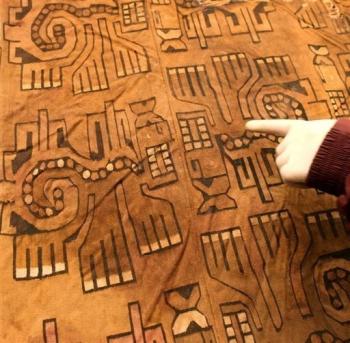
The woman was from the Wari culture, said archaeologist Isabel Flores, who heads work at the Huaca Pucllana, a mud-brick complex several blocks large located in the Miraflores district of Lima.

"It is an important find, because we have found over the years several tombs that have been looted, but never one that was intact," Flores told AFP on Tuesday.

"It is a woman because in the surrounding area we found offerings and textile items like those of a (female) weaver," Flores said. The archaeologists also found ceramics and the remains of children who were offered as sacrifices to accompany the dead person in the afterlife.

The Wari robe found has an intriguing pattern design on it. More interesting, is that the accomplished road building culture came before the Incas. This find may yield insights for years to come.

The Lima grave had three mummified adults, but its clear that the lone child found was part of the common ritual sacrifice of the Wari culture to the sea and their land. Peru is also finding more cultural treasures and artifacts in the Andean highlands making a strong case for placement in the pantheon of cradle of civilization titleholders.

In Egypt, finds in King Tut's tomb bring questions such as paternity of the 2 fetuses found in a box, nowadays they would be called preemies, or why were the girls were inside Tut's tomb the first place from a cultural standpoint.

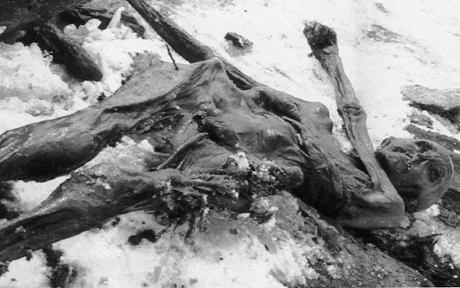
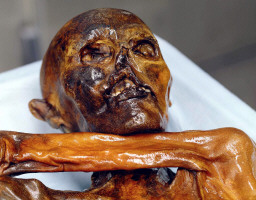
Then, there is the German couple, Helmut and Erika Simon who in 1991, climbed Simulaun Glacier in Italy when much to their surprise, discovered a body
on ice. Shock set in when the classification of the remains are carbon pinpointed as prehistoric. The Italian city government of Bolzano sponsored the gingerly intricate removal of the Mummy, authenticates it with national resources, takes possession of it, releases pictures of the mummy, makes it available for public tours, earns millions of euros over time, but gave a chintzy offer to the couple of 5000 euros for their trouble. Both nations laid claim to The Iceman. Finally, German couple sued Italy fourteen years ago and are just now coming to a settlement after a chintzy offer by the Italians. What is it with Italy demanding their stuff, like art works, but not giving rights to others for making a discovery or keeping ancient treasures they officially looted in the name of fascism? (Photos EPA)
For years, Bolzano's provincial administration have been offering the Simons 50,000 euros.

In spurning the fee, the Simons cited the estimated four million euros a year the Iceman generates for restaurants, hotels and souvenir-sellers in Bolzano alone - not to mention a worldwide industry of TV programmes, documentaries and books.

They filed suit to establish who found the prehistoric hunter and who should get the proper reward.

Italian law lays down a finder's fee of 25% of a discovery's value.
More interesting, The Iceman is now said to be cursed after seven people mysteriously died under curious circumstances. Helmut Simon died in a mountaineering accident in 2004.

Filmmaker turned author Hugh Thomson, spent years trekking across Peru, yet touches the spirit that the key to understanding country is to acquire knowledge of it ancients roots. As a testament to that he brings his love of lore and his historical wanderings to paper in A Sacred Landscape: The Search for Ancient Peru. I'll say it again one of the best books to be found on pre-Columbian history is 1491 from Charles Mann. It is a must have for any well stocked library.


Sunday, March 23, 2008

A Day and a Year Dedicated to Water


Water holds the meaning of life. March 22nd is an annual dedication from the UN for World Water Day. A nation's quality of life and measure of economic success depends on how big and how clean is their water supply. Few understand where their water originates, whether the source of it is an ancient aquifer or the cool fridge dispenser with cube or chip ice options.

Clean water is increasingly difficult and expensive to find consistently across the entire planet. Just last year in the US state of Georgia, the Governor held a Prayer Vigil to seek God's help in granting Rain as 3,000,000 people in Atlanta were down to the last month of their water supply. Lake Chad was once a vast visible water source on 4 nations' borders, now it is a dilapidated and polluted puddle, virtually inaccessible from war torn Darfur where potable water is everything in maintaining power during a drought. The United Nations states more than 1 out of 6 people on Earth have little to no access to clean drinking water. Where is our political will to make clean water a human right?

Mighty nuclear power nations are finding water issues that are close to making them helpless in the face of shortages that will put the economy in shambles. China literally moved the Yellow River so their would be enough water in Beijing just for the 2008 Olympics. The US has a looming crisis in the Western region as one governor proposed taking water from the Great Lakes which have been hit with severe drought conditions. Pakistan is desperate to build dams for urban dwellers, industry and power supply, but it diverts water away from farms, livestock and its indigenous peoples. Every dam project or public private partnership involving water touts dramatic water improvements and smaller operating costs which never quite turn up as rate decreases; see China's Three Gorges Dam or Libya's multitude of Islamic Green pipes for an underground river that trickles along at best.
Water and Power Development Authority (WAPDA) member Muhammad Mushtaq Chaudhry said that the Mangla Dam raising project would be completed by September 2008. He said that the construction of Mirani Dam, Gomal Zam Dam, Subakzai Dam and Satpara Dam would be completed by 2009.

He also claimed that the country would overcome the water-shortage problem if the new government announced that it would construct three new mega water reservoirs.

Only a few decades ago, Pakistan was considered to have an abundance of quality water, but a recent World Bank report stated that Pakistan was among the 17 countries that were currently facing a water shortage and its reservoirs would drastically decrease in level by 2025. Moreover, Pakistan is currently close to using all its surface and ground water, but it has also been projected that over 30 percent more water will be required over the next 20 years to meet the increased agricultural, domestic and industrial demand.
Causes are many on the looming water crisis. It takes 100 tons of water to produce one ton of grain. Mix in droughts that are shredding the US, Africa and Asia and food security for the world is at stake. Saltwater seeps into fresh water supplies rendering valuable agricultural lands worthless as oceans infiltrate inland. This occurs at faster clips in Florida, Louisiana or Indonesia after the tsunami and other locales bordering Oceans or where wetlands are eroding due to over development or global warming. No one is immune.

The crucial need for fresh water and better sanitation led the UN in 2006 to make 2008 The Year of International Sanitation. Access, just access, to clean water is one of the Millennium Goals. Over 2.6 billion people do not have acess to adequate sanitation leading to waterborne diseases or diarrheas, reduction of clean water and blindness. In impoverished war torn places, women seek privacy late at night for toiletries, leaving them open to repeated violent attack or harassment during daylight hours when fetching water filled with animal waste for their families. Something as simple as toilets protect so much more and give people a sense of their dignity back. Sanitation would be an investment that immediately pays off in increased standards of living and protection of precious water supplies.

Diarrhoeal disease is a leading cause of death and illness, killing 1.8 million people each year. Poor hygiene and lack of access to sanitation together contribute to 88 per cent of all deaths from diarrhoeal disease, with children paying the highest price: 5,000 deaths a day. Hundreds of millions of other children suffer reduced physical growth and impaired cognitive functions due to intestinal worms.

Improved access to sanitation would also lead to very high avoided health sector costs, according to UN research.

On a typical day in sub-Saharan Africa, for example, half the hospital beds are occupied by people afflicted with faecal-borne disease. Treating preventable infectious diarrhoea consumes 12 percent of the region's total health budget.

Around the world, an estimated 200 million tons of human waste and untold millions of tons of wastewater are discharged uncontained and untreated, into watercourses every year. As a result, humans are regularly exposed to bacteria, viruses and parasites -- spread through direct or indirect contact with these watercourses. Such exposure is the leading cause for diarrhoeal disease (including dysentery and cholera), parasitic infections, worm infestations and trachoma.

A burden are burgeoning populations where water is scarce. In the Middle East and other developing areas where the population is younger with more people of child bearing age are putting tremendous pressure on shrinking resources. Water is more precious than oil and as nations hurry to develop more water is required - but at what expense?

Wednesday, February 27, 2008

Peru Digs Up More Proof of Early Civilization

Sixteen years of digging in the dirt in the inaccessible Andean foothills of Sechin Bajo paid off for Peru, two German archaeologists and their prominent local peers with a find that further challenges the concept of the Cradle of Civilization. There are certainly more than one and this find augments Peru's historic stake. Peru has its share of 5,000 year old pyramid structures too. Mesopotamia, South Asia and the Middle East have competing company from the coast of Peru from further finds of an Inca Plaza validated by carbon dating to 3500 to 3000 B.C. This is the fourth in a series of digs sponsored by a university in Berlin.

From northern Peru, Casal, remains the oldest known Preceramic civilization in the Americas with carbon dating and other tools pinpointing the date to an astounding 2627 B.C. Next to the recently discovered structure, showing an ancient version of suburban sprawl, an early six foot frieze was found depicting what many believed was the aftermath of a typical human sacrifice imprinted with a man holding a trophy head. What makes that cultural discovery especially interesting is similar imagery was unearthed in Moche Lords of Sipan tombs sparking questions about migration, economic viability and civilizations interaction in such inhospitable conditions.

After the ruins are rehabbed and cleaned up after archaeologists finish with their grids and ropes, they look spectacular as evidenced here in Machu Picchu, The Lost City of The Incas. These ancient cities had early urban planning and thoughtful means of adapting to the terrain. The newly discovered Plaza seems to show the tenets of community building by the Incas was shared knowledge. (Allard Schmidt)

"It's an impressive find; the scientific and archaeology communities are very happy," added Dr Cesar Perez from Peru's National Institute of Culture who led the project. "This could redesign the history of the country."

The site consists of an area around 14 metres across and scientists say it was built by the Incas who ruled Peru prior to the invasion of the Spanish.

Scholars are turning their keen nuanced attention to the indisputable evidence that several civilizations thrived simultaneously in ancient times. Past historic finds have found a layering of communities atop one another as centuries passed. This lends itself to the buried ancient suburban sprawl scenario according to some scholars who worked on past digs.

"We've found other pieces of architecture underneath the plaza that could be even older," German Yenque, an archaeologist at the dig site, told the Reuters news service.

"There are four or five plazas deeper down, which means the structure was rebuilt several times, perhaps every 100 to 300 years."

Kim McQuarrie covers the 16th century forward for the Incas in The Last Days of the Incas. Peru is a meld of its ancient and modern past as it struggles to make its history known amid the attention paid to the contemporary Middle East societies with their finds of antiquity known the world over.

Saturday, February 23, 2008

Everybody Comes From Africa

Out of Africa is not just a film, but a reality based Truth about sub-Saharan region from where we all started, eons ago, before the genetic mutations took place to grace us with the racial diversity seen today. Nomadic humans migrated for many reasons, leaving a trail of genetic clues for scientists to map, putting together a complex puzzle as a detailed travelogue of human diversity. Three separate major studies of DNA reached the same conclusion. Genghis Khan's army left a genetic imprint, as did those who traveled the Silk Road connecting East to West, before Marco Polo 'discovered' it for the western world. Some frozen tundra Siberian Russians share ancestry with Mayans among other people from the sweltering tropics in the jungles of South America.

"This is the definitive study to show variation within populations," said Marcus Feldman, professor of biological sciences and a member of the team.

"This tells us that the Middle East has long been a center of migration - that people have been passing through there and leaving genes as they go, either from east or from the west," Feldman said.

The marauding Mongols left not just a huge cultural and historical impression in central Asia, but also a genetic one. For instance, the Hazara people of central Afghanistan share genetic ties with East Asia.

Genome Center magnifying tools made it possible to study these very tiny genetic mutations, called polymorphisms. Mathematical analysis of the mutations - looking at differences and similarities between populations - creates a historical map of human migration.


America's nutbar KKKlansmania, Germany's embarrassing Hitler poodle offspring - the Neo-Nazis, India's tragic caste system enforcers to the Untouchables, Middle East Islamic purity mavens, and hardliner separatists in Latin America are all genetically tied and historically entwined with Mother Africa too. Pass them the smelling salts in massive quantities. Science is a thing of ironic wonder and chaotic beauty as it discovers, amasses then ruthlessly publishes new DNA evidence eviscerating and undercutting twisted rationales for belief systems on race. Amino acids in cells provide the proof.
Joshua Akey, a genome scientist at the University of Washington, Seattle, considers the study very important, as it reveals that the purifying selection, known as natural selection, has not worked too well for Europeans. Akey also thinks that this discovery could have implications on human health.
This is not new knowledge, but adds pesky persistent facts to a body of work begun almost since the study of where did humans originate. Africa. Europeans possess more possible harmful genetic mutations than African Americans according to the latest study from a team of international researchers.

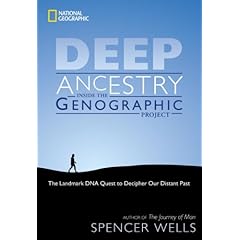
There is rich and detailed group of works that look deeply into ethnicity and genetic histories reaching in scope from Jewish scholars in pursuit of health information to the scientists mapping DNA. Deep Ancestry: Inside the Genographic Project, gives an excellent rendition of the 170,000 year old woman who shares a genetic marker with ALL mankind, the African Eve, then outlines where we are today and how DNA blazed a global trail for scientists and anthropologists to follow. Spencer Wells is the author.

Saturday, February 16, 2008

Food Allergies On the Rise Worldwide

An allergic reaction in a young child is a terrifying thing to witness - well anyone's is really, because sometimes no one can determine what started the anaphylaxis. In the USA, the number one culprit is the well traveled peanut. For those with that specific allergy, just touching a peanut has severe implications. A famous case between two teens with one having had a breakfast featuring peanut butter on toast and the other an allergy, kissed each other. Anaphylatic shock was first diagnosed causing death - later proved to occur from an asthmatic reaction to cigarette smoke, not the peanut allergy. Foods served in school cafeterias and at snack times are under pressure from teachers and parents for more content scrutiny as allergic reactions all over the world are on the rise.

More states are moving toward standardized policies for dealing with anaphylaxis in schools, said Anne Munoz-Furlong, who runs the Food Allergy & Anaphylaxis Network.

About 2.2 million school-age children in the U.S. have food allergies, she said.

About 400,000 of them are allergic to peanuts, she said.

Monica Hollenberg of Kennewick knows how dangerous that allergy can be.

Her son, Benjamin, 7, recently touched the crust of a peanut butter sandwich at school. He then touched his eye.

His eye turned red and became severely swollen, Hollenberg said.

Benjamin has a life-threatening peanut allergy and school officials didn't immediately recognize he was having a reaction, she said.

Peanuts are originally from Peru and other places in South America. Portuguese colonizers carried peanut seedlings to Africa and China from Brazil. Peanuts made their way back across the ocean to America from European traders, where it is now a cash crop in Georgia, Oklahoma and Texas for oils, peanut butter and other products. But peanuts are not alone in the food allergy rise. Milk based products are under pressure to look at labeling, especially for milk from cloned cows which the US FDA currently says is not necessary. Genetically modified (GM) seeds are not allowed in Europe, but they are prevalent in the US.

One issue is parents inserting their judgment for what constitutes an allergy versus a medical diagnosis. Australian dietitians note with some alarm the effects of not eating enough foods with the correct amount of minerals and vitamins due to self-serve diagnostics. Food Allergy Activists may rely too much on data that is compiled over a decade ago and needs scientific peer review to augment some popular beliefs because the data should also incorporate internationally known issues rather than an American bias as allergies are noted globally. Scientists note, no increase in the number of allergy sufferers, but a dramatic increase in the number of parents ascribing rashes, itching and behavioral issues to certain foods like milk, eggs or others. Researchers are actively seeking cures for those with milk allergies. One doctor sums it up best with:

A recent report from the American Academy of Pediatrics summed up the whole food allergy mess this way: "It is evident that inadequate study design and/or a paucity of data currently limit the ability to draw firm conclusions about certain aspects of [allergy] prevention through dietary interventions." Included in that report were questions about mothers avoiding allergic foods during pregnancy and breastfeeding, having kids avoid allergic foods until 2 to 3 years of age and - to my international parents' delight - when to let children start solid foods.

So what do I tell parents now? While I wait for better information, I'm hedging my bets and not saying anything new: Breastfeed exclusively for 6 months; moms, eat what you want; start solids with cereals between 4 to 6 months, and other solids at 6 months; it's best to avoid commonly allergic foods until age 1, and maybe a little longer if there's a strong family history of food allergies. But, if you have cultural traditions that favor introducing foods differently than that, go right ahead.

Nobody has any definitive answers, but there are a number of increasing dangerous issues around our food supply. Doctors plus scientists must take anxious parents complaints more seriously. Parents need to be patient in the quest for proven causes. Looking for a root cause of food allergies will take dedicated scientists looking at the effects of fish farms and the water supply, cloning on corporate farms and laboratory genetically modified food served over a period of time. Economics play a large part in which things get studied first or rise to the top of a national or global political agenda.


The title belies the seriousness of the subject, but many have added the Food Allergies for Dummies to their library of must reads on the topic. This book by Robert A. Wood, MD and contributor Joe Kraynak, is one of the most recently published works on the subjects of diagnosis and remedies in the past few months. For you, Temika - Luv Ya!