Showing posts with label Saudi Arabia. Show all posts

Friday, November 28, 2008

Art, Architecture and Arabia

I M Pei's architectural pedigree scales the heavens of all types of art on the world's most populated continents. A mix of cultural form and function wrapped in glass, steel and stone gives iconic meaning to some of the world's most prestigious museums, Louvre's inverted pyramid, Cleveland's Rock and Roll Hall of Fame, the National Gallery of Art or the Musée d'Art Moderne Grand-Duc Jean (MUDAM) in Luxembourg, all containing priceless works on display. At the age of ninety one, Ieoh Ming Pei, Pritzker Prize winner and a multicultural phenom put his imprimatur in Doha, Qatar on the newly opened Museum of Islamic Art (MIA). The magnificent spare no expense building sits astride one of the famed man-made islands as a modern wonder paying homage to the past. Showcasing the art pieces on two floors the curator paid attention to a span of a thousand years, across geography from the ancient Persia to a jade pendant from India to a multitude of art materials. Exhibits are exquisite after the impressive eye candy the symmetrical museum makes upon arrival with reflecting pools, a geometric main staircase hall with the Zen of an Islamic garden. It was a cool enough event that Robert De Niro attended the museum opening amongst the Gulf region's pantheon of royalty.

Ten years ago, this started with the Emir H H Sheikj Hamad bin Khalifa Al Thanki and Sheikh Hassan Al Thani family concentrating on the procurement of Islamic artifacts amidst Europe's established auction houses. London's art scene saw an influx of capital dedicated to filling a museum that was but an idea on a draft board as the final crown jewel in the stellar architectural career of I M Pei. Five stories of wonder encapsulating 382,000 square feet with a price tag of $300 million is the entry fee to establish Doha as a cultural destination for Arabian and Western tourism and pride of place in the hoity-toity art world. The collection features a $73 million dollar Mark Rothko abstract painting as well as the best of art from other cultures while featuring the works of little known Islamic masters. (Picture: Maher Attar)
Not long ago, the idea of culture being a reason to visit the Gulf would have made other Arabs laugh. No longer.

The Syrian cultural historian Rana Kabbani sees a political element to the museum, putting Doha on the cultural map.

"I think all the rulers in the Gulf see what they really lack isculture on a grand scale, as a kind of imperial identity. It's a political-cultural lack. They have the means, and they're going for it."
That's why along the coast, two museums are planned for Abu Dhabi - branches of the Louvre and Guggenheim.
Art in the Islamic world is taking a new resonance as the museum of the millennium opens and Saudi Arabia holds more gallery exhibitions albeit in embassies. To inaugurate the museum there is an exhibit and a conference Beyond Boundaries - Islamic Art Across Cultures. There was a Sunday special panel featuring the architect of the decade, I M, Pei on Islamic Architecture from Tradition to Modernity.

Women are painting, sculpting and creating their own art behind the veils and scrolled walls in Saudi society. A public showing is a cultural possibility with embassy exhibits more prevalent in the realm of the possible and where chances increase the art's exposure. The colors and compositions are arresting, more so because of who the people are that are trying new mediums are garnering attention for their sophisticated works. The Kingdom pledged to sponsor the best are culled from a competition in their own embassies as a furtherance of showcasing their people's talents with clay, camera or paintbrush.

One artist took advantage of the venue to hang an abstract painting of a woman, with one breast clearly depicted — a hint of nudity still taboo outside the diplomatic confines of the embassy, where Saudi Arabia's religious police cannot enter.

The Wednesday night showing in a small hall was packed with expatriates and, more significantly Saudis, whose presence was a reflection of the surge of interest in the arts in the kingdom in the past few years. Local artsshows have been on the rise, more Saudi artists are participating in overseas exhibits, and more universities and schools are offering arts degrees.

The first non-governmental arts society was established a year ago, with four women on its 10-member board. Saudis have become more accepting of abstract art, which, only a few years ago, was the subject of ridicule. And in many Arab cities, Saudi collectors are snapping up works by local artists, some of whom get special orders from their rich clients.

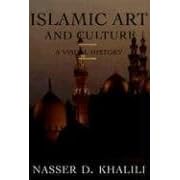
So many beautiful works to page through in Islamic Art and Culture: A Visual History. It was important to me to find a book written by an eminent Islamic scholar. Professor Nasser D. Khalili presents the full range of art possibilities and the meaning behind each selected piece. Great coffee table book sure to cause cultural discussion.

Sunday, June 22, 2008

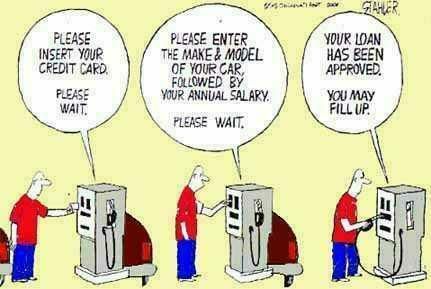
Gas Prices Break Hearts Around the World


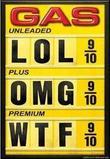
A heart clutching story I heard recently exemplifies the world of hurt and economic devastation wrought by the price of a gallon or liter of gas. A lady went in to a local mini-mart. She stood in line and bought just one gallon of gas. It was all she could afford. One single gallon. Dire as her situation is, she is definitely not alone anywhere in the world.


In Gansu Province, Zhang Li, a tour guide, waited in line for more than an hour, hoping to fill up the tank on his Land Rover Freelander before the higher prices went into effect.

"I made it just in time," he said. "They stopped serving gas at the old prices just 20 minutes after I left."

The complaints from Chinese about high gasoline prices might not elicit sympathy from American or European consumers: hovering at $3 a gallon, or 79 U.S. cents a liter, with the new increase, gasoline in China costs 25 percent less at the pump than it does in the United States.

As a matter of policy, the Chinese government sets gasoline and diesel prices well below international market prices to encourage economic growth. In 2007, China's subsidy of gasoline alone was $22 billion, close to 1 percent of its gross national product.

The scary gas story is playing out around the world in Chinese villages and cities as prices went up 16 %, along the Kinshasha highway in Africa, at diesel pumps in England, the fenced in folks in Gaza to the daunting amounts of the flammable liquid needed for fleets of trucks to transport goods across continental Europe. In the Philippines, fuel prices (P57.96 per liter including VAT) rose for the 15th time since January. Last year in Burma, the junta raised fuel prices 500% in one night to spark the long running Marching Monk rebellion as the poor bear the brunt of the increases. India is seeking to regulate oil prices within a range. Energy producers/speculators/big oil companies are gilding their own wallets while taking matches to pounds, dollars, pesos, rubles of the planets lesser beings who were already living paycheck to paycheck and getting angrier by the nanosecond.


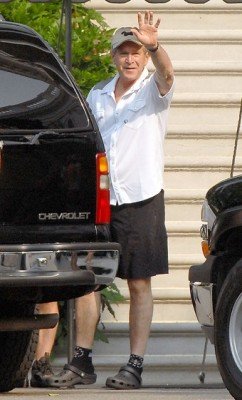
President Bush a la Oliver Twist appealed to King Abdullah in May to sing for his supper for a bigger soup ladle of oil into his
energy crisis made-in-America mess bowl. The Kings' ministers politely told him to pound sand. As the price of a single barrel of oil becomes the equivalent of a gold ingot, the Kingdom relented. Today, as co-dependents, the oil-mega rich Saudis held an OPEC meeting at a Red Sea resort to announce an increase of daily production by at least 200,000 to try to tamp down speculators in the market while supplying a potential panacea of relief for millions around the world at the pump and most notably Britain's Prime Minister Gordon Brown with three dozen energy ministers from around the world. There is no guarantee that an increase in production will reduce prices or the rampant speculation as their are countries that want their oil purchased too: Nigeria, Venezuela, Cuba, Iraq, Iran, Russia just to name a few. China, India and Japan are not shy about bidding against the USA for it either with the exceptions of Venezuela and Iran.

For Saudi Arabia, the meeting was a rare foray into the spotlight, and an opportunity to underscore that the oil-rich kingdom was aware of growing anger and frustration caused by surging prices in oil-importing countries.

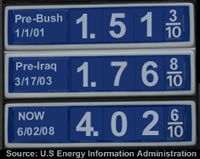
A seven-fold increase in the cost of oil since 2002 is causing growing economic and political pain in both industrialized countries and the developing world.

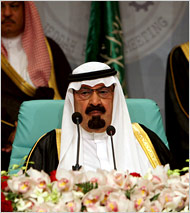
King Abdullah of Saudi Arabia, who called for this meeting just two weeks ago, addressed the oil and energy ministers of 35 nations in a vast ballroom, saying he understood the pain that $140 oil was causing across the globe. He confirmed an expected increase in Saudi production by 200,000 barrels a day. News of that was leaked earlier this week, and was already factored into the still-surging market.

200,000 (more per day) x $140 a barrel = $28,000,000 (more per day) give or take a price reduction. Will China buy it all up or shall some enterprising speculator say this is temporary. To combat that, the second part of the royal Saudi announcement was to continue to up production to levels never seen before for a longer duration lasting at least a year. But that poses some downstream capacity issues that the Saudis and other OPEC participants say will be offset as they build refineries and other assets to handle the demand. Things that makes me go hmmmm, because that means a further dependence on Saudi oil as the economy becomes even more tied to Saudi oil, protection of the region's oil and does little to wean the world away from fossil fuel addictions, as the more oil and gas consumption rises, the worse greenhouse gases heat the planet. What a lovely feedback loop the world finds itself in as the Saudis strengthen their hand in ways to affect national security and global foreign policy decisions.


Then there is the drilling issue. For ten years, an oil preserve race between Canada, USA, Russia and evenCuba is saying they have rights to drill and that's just a hop skip and an innertube ride away from Florida's gold coast of beaches. One spill would lose billions of dollars in tourism, depress coastal real estate prices and no recovery for already fragile and hurricane battered ecosystems.

John McCain burbled about his reversal no drilling of America's coastal waters while speaking to
Bush/Cheney crony Texas Oilmen. Drill in pristine areas that would never again host the ecological diversity needed to ward off the storms and wild weather sparked from oil in the first place.

Drilling yields not one drop in production before an end of President Obama's second term. McCain's pander designed to offset the political pain in the US to the the single gallon of gas that now costs more than a Happy Meal. In the US, there are billions of acres of leases already going unused without the need to give the greedy oil companies earning the biggest profits in the history of capitalism more while simultaneously ruining the only planet we have to live upon.

None of this immediately alleviates the price for a gallon or liter of gas around the world. Food prices are wedded to oil prices. And there are no guarantees that even with OPEC stepping in today that tomorrow sees a long term decline in prices. What is at stake is finding a way to dramatically increase the use of alternative energy for those in dire straits while preserving the environment. The only people who can afford the rise in oil prices are the oil speculators and energy producers.


From the esteemed Richard Heinberg, The Party's Over: Oil, War and the Fate of Industrial Societies.


Wednesday, April 16, 2008

Arab Book Market Potential Tantalizes Publishers

Book fairs are tremendous places to find gregarious introverted bibliophiles, secure interesting texts not offered by big retail chains or spot the next new and upcoming trend in the book world. This year is the hot new year for increasing reach into the rapidly expanding Arab Market. Earls Court Exhibition Centre in West London is the scene of a Book Fair this week, featuring new titles and new literary translations in Arabic. Demographics point the way for publishers as the media age in Arabic countries is younger than the more mature markets in North America & Europe, meaning more book buyers and an opportunity to make a long lasting publishing relationship with a new highly educated group with high disposable incomes.

Translated authors have a harder time gaining traction in Europe, especially those from Arabia, but it looks like times are changing. Part of the problem is the lack of diversity inside British, and for that matter American, publishing entities that can read in the original language and guide the book through the marketing and publishing process with an author seeking foreign publishing rights in English speaking countries. The US government still can not keep up with enough Arabic speakers and writers to translate materials with the same limitations now playing out into the marketplace where opportunity costs are making businesses take notice of a thriving market. London's Book Fair or LBF is interesting, as rather than vendors hawking wares in the stands, several nations and a Kingdom or two have set up booths to promote native authors. Yemen is a guest of honor at this years fair.

"The market is potentially very large" for Arab authors, said Margaret Obank, founder of the Banipal publishing house which sells English translations of Arabic books.

"After 9/11 people thought, my god we ignored that (part of the world)," she said.

"They now realise there is literature out there."

Despite all that, having to translate books remains a major barrier holding back greater literary exchanges between the West and the Arab world.

A 2003 report from the United Nations Development Programme estimated that just 50 Arabic-language books a year were translated into another language.

Culturally, readers and seekers of knowledge are venturing further afield in Europe and North America collecting writers that create a nonfiction context or set stories in places they know, not just visited for extended stays. On the flip side, the world of western literature and nonfiction is becoming more accessible to Arabic speakers with translations that increase each year due to popular demand.
'Kalima means business when it comes to filling gaps in the Arabic library and we are working with publishers from all over the world to achieve that goal. We have already completed nine titles despite only launching late last year,' says Karim Nagy, Chief Executive of Kalima. 'It is great that publishers are now recognising the opportunities in the Arab world. Organisations like Kalima can help the international publishing industry access this largely untapped market of 300 million Arabic speakers.'

At its official launch last November, Kalima announced a list of the first 100 candidate titles to be translated and published in Arabic, with the following titles now completed:
  • Il Segno (The Sign), Umberto Eco
  • The Halo Effect, Phil Rosenzweig
  • The Future of Human Nature, Jurgen Habermas
  • A Briefer History of Time, Stephen Hawking
  • Kafka on the Shore, Haruki Murakami
  • The Arab Roots of Capitalism, Gene Hec
With an attendance pegged through today at 23,000 publishing professionals and industry mavens, the LBF was a perfect place for the United Arab Emirates to discuss and promote its 'Oktub' programs for original authors and 'Tarjem' for translation that are part of a $10 billion, (b as in book), endowment to nurture young Arabian writers from the region.

A best selling work from the region feted in London is the controversial The Yacoubian Building now out in paperback with great cover art. It features the writing of an Egyptian dentist, Alaa al Aswany that caused great controversy due to its straight forward treatment of sex. Great reviews.

Monday, October 29, 2007

Queen to Give King Royal Treatment

Pomp, Planes and Controversy abound in the royal greetings between a meeting of the monarchs. The Queen of England, Elizabeth II, is rolling out the London red carpet for King Abdullah of Saudi Arabia amidst growing public gasps of pained chagrin. It has been two decades since the last visit to London for a meeting of the two royal representatives. The King's five jumbo jets had barely touched down on Monday before the city started lamenting aloud about torture policies, the reduced roles of women in the Kingdom and the quashing of the bribery scandal connected to the al-Yamamah arms deal. Some Members of Parliament are dusting off their best British protest protocol against the Queen's Guest at the Saudi Arabian embassy . Britain is suffering a culture and religious clash as several mosques continue to release literature of hate believed to be sponsored from inside the Saudi Kingdom.

This two-day state visit is choreographed on both sides with military precision from beginning to end. Terrorism is expected to be a high level topic of interest. The King got the ball rolling with an interview with the BBC days before his arrival. Saudi Arabia is negotiating to purchase 72 Eurofighter Typhoon planes from the United Kingdom while the Brits are expecting to speak more forcefully about Human Rights. Odd, selling weapons to a nation state expected to use their weaponry for benign purposes. But the King was openly critical of Britain's lack of response on counter terrorism measures provided by the Saudis. Britain's foreign minister, David Milland, canceled his appearance with his Saudi counterpart, Prince Saud al-Faisal. At the ministry level, talks are not expected to occur around difficult subjects. Cocktail conversation could be awkward.

"We have sent information to Great Britain before the terrorist attacks in Britain but unfortunately no action was taken," he said, speaking through an interpreter. "And it may have been able to maybe avert the tragedy."

A spokesman for Prime Minister Gordon Brown said no warnings were received before the July 7 attacks on London's transport system: "We made it very clear at the time that no specific warnings were received from any source."

"We do have a very close intelligence relationship with the Saudis," he added. "We just happen to disagree on this point."

Uneasy are the heads that wear the crowns. Complex world with long intertwined histories make for fascinating reading on both kingdoms. Norman Davies wrote the Isles: A History that gives fascinating detail of the collection of islands that comprise the Europe's United Kingdom. A History of Saudi Arabia from Madawi al-Rasheed offers explicit insights into the kingdom

Monday, September 10, 2007

Former Premier Bounced from Pakistan

Learning the words to the American classic, On the Road Again, is former Pakistani premier, Nawaz Sharif, after being unceremoniously told to get out of Musharraf's Dodge, mere hours after his arrest at the arrival gate. He SO thought it was going to be a hearts and candy welcome. Sharif should have booked a ticket to Hawaii. Instead he's back in Saudi Arabia after his public arrest and deportation. How embarrassingly Paris Hilton-like to have all that luggage when it was only a day trip. (Reuters photo/Petr Josek)

"It is only Musharraf's ego and his stubborness that is standing in my way," Sharif told ARY TV Channel at the Islamabad Airport Lounge, as he waited for the authorities' plan of action after his aircraft landed from London.

Describing as painful the situation he was in, the 57-year-old PML(N) leader regretted that he and his supporters who accompanied him from London were not able to make any telephonic contact with the outside world after their arrival here.

"This indicates the sorry state of affairs in the country. Emigration should be allowed. I should get my vehicle and be allowed to start my journey," he said. Sharif had planned to hit the road to reach Lahore after reaching here.

President Musharraf is clearly sending a message that he is the top commander guy and Shraif was not an invited guest. Problem is, no one knows for how long with Musharraf's serious negotiations with his former rival, ex-prime minister Benazir Bhutto still ongoing. She is planning a return. Musharraf came to office in a military coup. That could not have happened without the intelligence services cooperation. And the intelligence services are key to holding power in Pakistan. Meanwhile, Sharif thought that holding a photo-op at the airport with crowds of supporters who ultimately clashed with police, would sway Pakistanis. His charges of money laundering remain. Sharif exited Pakistan back to Jeddah, weeping. He wanted to be the one to overthrow Musharraf. Interestingly enough, Saudi Arabia asked Sharif to stay put in exile after the new Saudi intelligence chief met with the Pakistani president in Rawalpindi. (picture Earth Times)

Pakistan and Saudi Arabia have a storied history together. Pakistan's intelligence service, ISI received an immeasurable amount of funding from Saudi Arabia's stealthy spy commander, the inscrutable, urbane and American-educated, Prince Turki. Until last year when he unexpectedly quit then hopped on a private jet enraged, Prince Turki was the Ambassador to the US replacing the rakish Bush family crony, Prince Bandar. Prince Turki is/was godfather for Osama bin Laden, who just happens to be releasing another you-should-be-scared-as-Hell, America - YouTube-style video today. OBL is considered by many to be somewhere in the ungovernable badlands of Pakistan, the country with real nukes.

The intelligence, family and political ties between Saudi Arabia and Pakistan are legend. Saudi Arabia has funded a number of the strict Muslim madrassas in Pakistan. Surprise, surprise, Sharif returned to the Kingdom of Saudi Arabia today to resume his exile and refurbish his résume. The national Pakistan political soap opera continues.

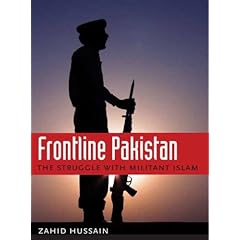
Frontline Pakistan: The Struggle with Militant Islam details the struggle that continues today to hold together a coalition of strength to govern in Pakistan. This offering is from Zahid Hussain. More history on Pakistan and the intelligence service, especially with superb Pulitzer prize winners mentioned here.

Monday, August 20, 2007

Middle East Mysteries

Camels are croaking at an alarming rate in Saudi Arabia. The Kingdom's Agriculture Ministry is confining the mystery camel deaths to hundreds. Many Bedouins regard camels as a necessity for keeping the quality of their way of life. Camels are bred for transportation, milk, and an ability to bear people or heavy loads. They are indigenous to a harsh desert climate with sweeping sandstorms and little fresh water. The catastrophic losses are critical matters of state for King Abdullah.
"The disease has to be limited to one place to prevent it spreading and then they have to find a serum," said camel breeder Hamad al-Harthy, who talked of hundreds of deaths.
No identifying cause for the deaths of so many animals has been made. Many camel owners in Saudi Arabia are speculating as to whether there is an infectious disease running rampant in the camel population. The Kingdom is offering payment and their initial belief is that there is a problem with the feed used. But the mystery remains.

In Egypt, they believe they have found the oldest human footprint to date. Of course, Dr. Zahi Hawass explains the find in his inimitable style known to lovers of Egyptian antiquities:

"This could go back about two million years," said Zahi Hawass, the secretary general of the Egyptian Supreme Council of Antiquities. "It could be the most important discovery in Egypt," he told Reuters.
Archaeologist are on a quest to find the tomb of the Lost Queen. The program from the Discovery Channel gives glimpses into the busy lives, family perils and fatal petty jealousies at court.

“The discovery of the Hatshepsut mummy is one of the most important finds in the history of Egypt,” Hawass notes. Indeed identification of Hatshepsut’s mummy is being billed as the most important event in Egyptology since the discovery of King Tutankhamen. The mere identification of a mummy seems to pale in comparison, but Hatshepsut isn’t just another mummy. She was one of the more remarkable rulers of ancient Egypt and certainly the most remarkable queen. ...

...The search for Hatshepsut has raised more questions than it answered. While scouring for clues that could lead to her whereabouts around her monuments and tombs, teams stumbled across love letters from her chief architect, bringing up questions about the nature of their relationship. Her daughter’s tomb was also discovered, as were indications that she was being groomed to take the throne after her mother.
The entire link is worth the read as the implementation of a Mummy DNA lab and identification has caused its own rifts and accusations in modern times.
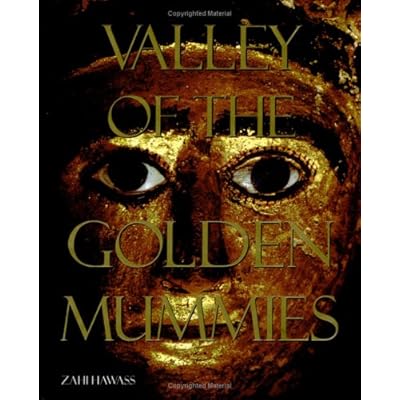
For more on Egypt's considerable contributions in archeology read Valley of the Golden Mummies by Dr. Hawass. It is a pictorial feast. Many of the stunning pictures are from his personal collection.

Bedouins and Nomads: People of the Arabian Desert by Etienne Diehu shows a stunning portrait of the cultural richness alongside immense hardships. This book was published in 2007.