Showing posts with label Japan. Show all posts

Monday, June 23, 2008

Whales Under Attack

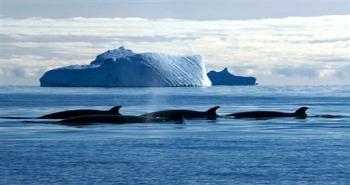
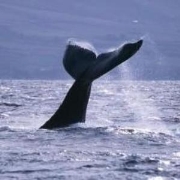
Whales are having trouble finding mates due to overfishing, collisions and being mercilessly hunted. There are not enough (healthy) fish for whales to eat to sustain their numbers. Lonely whales are choosing to die rather than live without mates. So What says Japan, Norway & Iceland as they petition the sixty year old International Whaling Commission (IWC) to hunt down haunted undernourished whales to increase the coffers of their own economic engines. It is 77 nations against 3 clueless countries that stubbornly refuse to accept that hunting whales for commercial profit was pretty much over in the twentieth century. Japan, deservedly, has been under international fire and surveillance for its constant flouting of the treaty with whiny exhortations that they have people for centuries who lived off of whale hunting and that should not change. Talk about out of touch with the times and the very real threat of extinction of certain whale species.

The psychological impact of over-hunting on the highly intelligent and sociable animals has been identified as the latest threat to the survival of the species.

The whale population has already fallen dramatically over the past few centuries because to culling by Japan, Norway and Iceland, and the poisoning of oceans which kills off their food.

But now a French scientist has said the majestic mammals - which can reach 80ft in length and weigh the same as a passenger jet - could also suffer from heartbreak.

Paris naturalist Yves Paccalet said: 'It may be that these intelligent animals are so exhausted from their combat with humankind that they have simply have given up the fight.
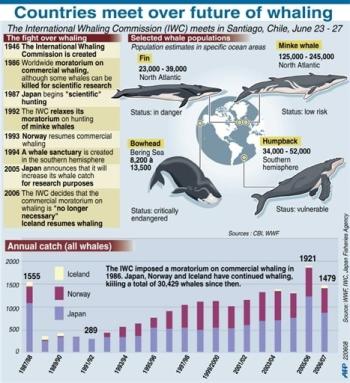
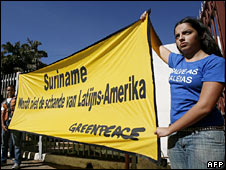
An International Whale soap opera continues for the next week in Santiago, Chile as the debate rages led by three outlaws to have the twelve year old ban lifted or relaxed. Greenpeace's ship, Esperanza, already tailed Japan's pseudo research fleet as they chased whales for a biological study project in the South Seas of Antarctica earlier this year. Japan, now, wants to "shop" for whale meat closer to home. After a ten year absence from the IWC, returning in 2002, Iceland just plain ignores the commission's treaty using scientific study because Icelandic fisherman claim whales eat too much fish. Competition.

The Japanese delegate to the IWC, Joji Morishita, did not confirm his country's agenda at the meeting but he reaffirmed support for commercial whaling, according to an interview given to Chile's El Mercurio newspaper.

Morishita said his country's consumption of whale meat went back hundreds of years and should be respected by the rest of the world.

"This is a case of accepting the coexistence of different cultures," he said.

Japan kills some 1,000 whales a year using a loophole in the IWC moratorium on commercial whaling that allows "lethal research" on the ocean giants. Norway and Iceland defy the moratorium altogether.
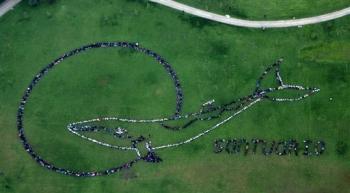
The IWC seeks an Ocean whale preserve on the same scale as the UNESCO World Heritage site, Mount Kenya National Park, on land for conservation and encouraging observation in their natural habitats. Australian Environmental Minister, Peter Garrett, seeks an overhaul of the whaling forum's charter as the debate needs to encompass conservation and environmental concerns. Australia has been a loud and vociferous critic of Japan's whaling practices as well as sending Oceanic Viking in pursuit of Japan's whalers. Iceland hunts Fin or baleen whales which are an endangered species.
A démarché, diplomatic warning notice, was delivered to an unconcerned government in Reykjavik. The irony is that the excess whale meat Iceland killed was for export to Japan which claims no way no how would they be purchasers. It takes 75% of the IWC membership to make a change and no consensus is yet happening. Japan threatens to leave the IWC in dramatic fashion if their proposal is rejected. Major negotiators that settle wars are trying to close the commercial whaling loophole while others are stalwarts of the status quo. The sea saga drama drags on.

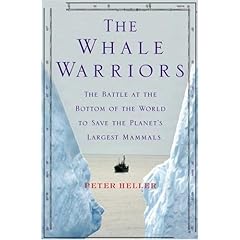
Peter Heller depicts the dangers of the deep for the world's whales in The Whale Warriors: The Battle at the Bottom of the World to Save the Planet's Largest Mammals. Heller went aboard Watson's Sea Shepard for a whale saving mission/adventure of a lifetime and captures what drives people to go to sea in a massive effort at whale conservation from the hunters.

Wednesday, May 28, 2008

Japan Welcomes African Leaders

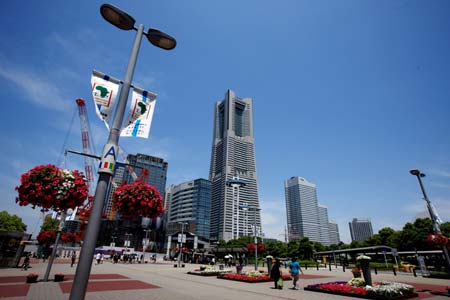
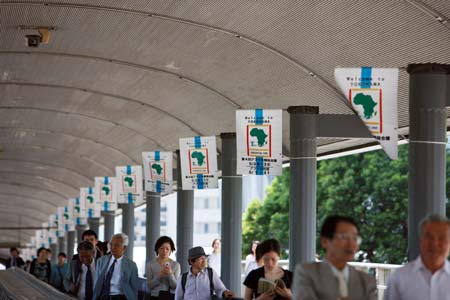
Stark contrasts abound with development minded, economic powerhouse Japan invites Africa's leaders with abundant resources to sit down and chat at the Fourth Tokyo International Conference on African Development (TICAD IV). Actually, the conference is really in the suburb Yokohama in the Minato Mirai 21 district and is only the fourth since 1993. Japan, a closed society, yet first world nation needs to procure resources. The African continent is replete with all manner of resources. Dictators and some well meaning naive African leaders have in the past too quickly signed away mineral rights, water distribution and natural resource development to China and other nation states with positive cash flows, leading to trade inequities. Japan needs to get in line as the price of oil soars or remains unstable. Japan needs more oil and a stream of resources to continue fueling the economy at its current rate. Japan is facing its own debt challenges which have rocked the government in recent months. Hence, Prime Minister Yasuo Fukuda extends the hand of friendship and a basket of aid to counterparts in Africa.
Under the theme "Toward a Vibrant Africa: A Continent of Hope and Opportunity", the meeting is to focus on boosting economic growth, ensuring human security and addressing environment and climate change issues in Africa.

Asia-Africa cooperation, intra-Africa cooperation and public-private partnership are important for the development of the nations. The meeting will serve as a platform for broadening the development partnership.
Japanese Foreign Minister Masahiko Koumura said prior to the meeting that the conference was expected to adopt the "Yokohama Declaration" outlining guiding principles and approaches to African development among the TICAD stakeholders, as well as the "Yokohama Action Plan and the Yokohama Follow-up Mechanism" laying out a road map for action-oriented initiatives with measurable targets.

Japan, at one point in history, has depicted all manner of black folks, among others not ethnically Japanese, with the worst connotations based on race as fully noted by the UN in a 2005 report. Japan now needs Africa's abundant resources to maintain its current quality of life. Africa's leaders, plagued by a surfeit of government workers on the take/dole/corruption path, underscores a desperate need to engineer a means of making money rather than spending it on government to build sustainable economies. All of which, in either case, affect the environment.
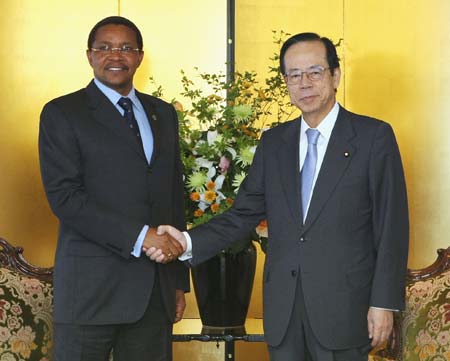
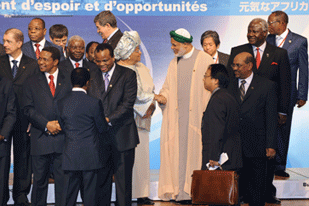
In a few weeks, Japan will host the Great 8 summit in July after a failure this weekend to get those self same countries off the dime to announce a global environmental package. Geopolitical discussions are on the table as Japan seeks more direct influence at the UN. Tanzania, Uganda, South Africa, Liberia, Ethiopia, Angola are among the countries with 39 African heads of state attending the conference. Japan is putting staggering amounts of yen on the table in loan and grants in exchange for development rights which is right in keeping with what the World Bank endorses. The enormous amount of debt each nation is racking up in these deals needs careful consideration. Longtime Africa Champion, by way of Ireland and the south of France, Bono, is ecstatic to see the aid promises, but wants decidedly more done for Africa, especially on the food and agricultural fronts.

Tanzanian President Jakaya Kikwete noted that only about two percent of Japanese imports were from Africa.

"Mr. Prime Minister (Fukuda), this must change. What remains to be seen is increased trade and investment, and more development of the Japanese private sector on the African continent," he said.

Foreign Minister Simbarashe Mumbengegwi of Zimbabwe, which faces intense international criticism, charged that foreign aid policies were slanted to serve political ends.

"The structure of lopsided power distribution in the United Nations system, particularly in the Security Council, is replicated in the development institutions such as the World Bank and the International Monetary Fund," Mumbengegwi said.

Much remain to be done as the value of goods to be traded will be a contentious topic. From Paul Collier comes a book that rips open how the world manages to keep a billion people from the bottom rung of the economic ladder from Asia to Africa. The Bottom Billion: Why the Poorest Countries are Failing and What Can Be Done About It springs from a life time of analysis from a former personage at the World Bank. Staving off a humanitarian crisis is not for the faint of heart and this book chronicles 50 failed states, especially those that sold their natural resources on get rich quick schemes.


Saturday, March 22, 2008

Comic Cat of Anime is Official Diplomat for Japan

Hello Kitty, then Pokémon (Poketto Monsutā) as a Nintendo game, later a movie and TV series, swept the island nation of Japan. The allure and lasting popularity of theses comic and cartoon characters spawned official recognition from Japan that a comic ambassador of their ilk was urgently required on the diplomatic cultural front.

Enter the doryaki (red bean pastry) eating cat Doraemon (b. 1969) to take on the awesome responsibility of making lifelong animé pals worldwide for Japan. The Land of the Rising Sun takes their cartoon cats very seriously, indeed. Hello Kitty is pretty tough to beat in Japan and other Asian markets for branding, but A-list celeb Doraemon is another type of cartoon cat, a giant teal blue one this time, that has special characteristics with wonder gizmos in a stomach pouch and competencies enabling purring pontifications about Japanese animé. Doraemon brooks no competition from American cartoon staples. Doraemon is beating some sixty year old mouse from Disney and a pudgy bear cub with a honey fetish who has a cute ass as a friend with optimism issues for popularity. Duh, from a ten year old Bart can't even beat Doraemon.

Using the political lexicon of the esteemed Joseph Nye of Harvard, Doraemon is using "soft power" to gain trust currency with audiences rather than "hard power" or trade imbalances caused by the sinking US dollar or the tremendous amount of Japanese manufactured goods coming onto the rest of the world's shelves and showrooms. Japan is making a strategic shrewd move and using a comic cat to ensure they touch each generation of consumers of manga or animé. It is a huge market opportunity and comic book readers, gamers and other students of the art form the world over are growing in economic power. Japan is branding themselves as the anime leader to reach out, not in an ordinary flesh and blood boring human way, which would just ruin the relationship effect and the drama of the art form.

In the Doraemon stories, the clever kitty is sent back from the future to live with and help his youthful master, Nobita, a helpless nerd who routinely avails himself of his pet's special powers. Doraemon normally reaches into his tummy-drawer, which is full of magical gizmos, to find something to help his pal out of each new jam - often stirring up new problems in the process. Doraemon stories often pack an educational or moralistic punch, offering lessons about honesty, perseverance, loyalty or history. In Japan, they have been collected in nearly 50 volumes that, to date, have sold some 80 million copies. Doreamon comics have also been translated into dozens of languages from the original Japanese.

Now, Japan's Ministry of Foreign Affairs will dispatch a "human-sized likeness of Doraemon" that will "participate in events hosted by overseas embassies and other diplomatic establishments to help introduce Japanese society and culture" to foreign audiences. (Yomiuri Shimbun) The Guardian's Tokyo-based correspondent reports: "Doraemon's charm offensive will begin with the screening of his hit film, Nobita's Dinosaur 2006, at Japanese diplomatic offices in several countries, including China, France and Spain." At this week's press conference in the Japanese capital, the "feline envoy - whose voice was provided by an actress hidden behind a sliding paper screen - promised to use his roving role to convey 'what ordinary Japanese people think, our lifestyles and what kind of future we want to build.'"

Anime has elements to the final product. It is usually hand drawn with some help from computer programs these days. Giant robots are a popular genre. Manga essentially translates into comics and has a pre-post World War II influence seriously studied. Many popular manga artistes were born in 1949 having a different perspective than some of the other comic artists of today. There are some gender differences in the art form. In 2007, manga or comics drew in almost 407 billion yen or $3.7 billion US, just in Japan. Bringing us back to Doraemon, the helpful ambassador, who is introducing and branding Japanese anime. It is all about the yen.


American audiences may not be as familiar yet, but that is changing. Fujio Fujiko authors this sample of the comic book, Doraemon in Japanese.

And to think you thought my knowledge of comic books was microscopic - Hi Ken!

Sunday, March 16, 2008

Space: Canada's Robot & Japan's Room of Hope


American astronauts on STS 123 brought the Canadian super robot to the International Space Station in erector set pieces aboard Endeavor. Today, spacewalkers spent seven hours attaching Mr. Dextres' mechanical robotic arms. Saturday, the robot had his hands attached to eleven foot arms. No space high fives or hugging just yet between the over 12 foot bot with human attributes (no legs) and his much shorter ISS assembly team, but nice Canadians in the frozen tundra of North America are beside themselves with joy.

Sans billowing cape for his almost two tons of weightlessness, Mr. Dextre, short for Special Purpose Dexterous Manipulator, will be able to fly around Earth in 90 minutes, bend at the waist, do ISS household maintenance chores among other super powers about which we have no knowledge. First though, Dextre's hydraulic 'oil' pressure, flawless "hearing" and obeying of parental computer commands and basic circuitry motor skills need checking to get a clean space bill of health from Mission Control. (AP Photo/Canadian Space Agency via THE CANADIAN PRESS)
"Dextre's getting a checkup," Pierre Jean, acting program manager of the Canadian space station program, told a mission status briefing after the spacewalk.
He said the arms each had seven joints for movement along with brakes to hold them in place and that the crew would be checking these and essentially "breaking the brakes in."
"When you get a new car you don't slam on the brakes, you ease them in. This is sort of what they will be doing with the brakes in Dextre's arm," he said.
The robot can be mounted on the station's crane to transport equipment and handle routine maintenance chores, such as replacing electronics boxes.
Japan is still shrieking from their turn in joy as their ISS room addition, christened Kibō or Hope, is officially added and begins opening day on this mission too. Of course, like construction on Earth, delayed end results, but one conveniently forgets frustrations once the project adds its first natable component - a round storage bin. Ironically, given notorious space issues in Japan, the new addition will become the largest of all of the space station additions. It will be the size of a London Double decker bus, with all the tourists on it.

A spacewalking Takao Doi was weightless though filled with national pride as he added his country's contribution to space history.

Last month, Europe had their addition bolted on during the last mission.
"This is a small step for one Japanese astronaut, but a giant entrance for Japan to a greater and newer space program. Congratulations," Doi radioed to Japan's new space control center outside Tokyo.

The cylinder is basically a storage compartment for the main segment of the three-piece Kibo, scheduled for delivery on a May space shuttle flight.

The final piece will be flown up in early 2009.
It follows the installation in February of Europe's lab on the ISS, which is now truly a global affair.

The opening of Kibo marks the first time in the 10 years of space station construction that equipment from all 15 partner countries is operating together in orbit.

I think Mr. Dextre needs a robotic dog.
A design flaw in an electrical circuit has left the $209 million robot, named Dextre, without heaters to protect its systems from the minus 200-degree Fahrenheit temperatures of space.

Understand the history of robots and spaceflight in the detailed background book of Robots in Space: Technology, Evolution and Interplanetary Travel, released in January 2008. Roger D. Launius and Howard E. McCurdy touch upon the science fiction components of melding human biology with human physiology. This publishing effort is from the new NASA History Series.

Tuesday, January 29, 2008

Shrove & Fat Tuesday on International Parade

The Festival of Venice, inaugurated in 1268, and revived in 1980, brings out a collection of rigid masks created by master artisans possessing exquisite details and mystique. En vogue, elaborate Victorian Costumes disguise the wearer since Italy's various rulers got their knickers twisted enough that these celebrations of debauchery in a refined atmosphere caused heartburn and vicious crackdowns. Maybe they were never invited to the grand palazzos.
In the Louisiana French Quarter, Mardi Gras, gorgeous François that translates into Fat Tuesday; is a soulful celebration with mystic krewes and bedecked saints marching in with crowds of swarming tourists wanting to be in any number to grab the gold, green and regal purple plastic doubloons thrown from feathered floats. Haiti brings symmetry with their identical chicken masks.
Brazil's Carnival has a storied samba history audaciously worn to show off skin sparkles in the shimmy parade. Only Japan has more Japanese, as these Japanese-Brazilians get their 2008 dance party on in fine fashion flash. Denmark embraces the slathered buns or delish danish at Fastelavn qnd works them off at parades and parties across Bavaria.

In Sao Paulo, the city with the biggest concentration of the 1.5 million Japanese descendants living in the country, the carnival parade will include a 1,000-strong contingent of Japanese samba dancers -- led by a native Japanese woman, Yuka Sugiura, 36.

He enthused that Sugiara, who moved from Nagoya, Japan to Brazil eight years to indulge her passion for samba, was "a great dancer -- and really beautiful as well."

Preparing for consequences from too much partying in Recife, Brazil; once again, the Catholic Church is scandalized and threatening excommunication at the lack of upholding the missionary position with some of the preparations involving condoms and morning after pills. Rio de Janeiro's mayor,Cesar Maia, got things off to a rollicking start by calling it "Earth's biggest party", other nations and participants may beg to differ.


From "Twelfth Night" it takes 47 full days to get worked up for the final night of circus atmosphere and celebrating mostly the same thing around the world for centuries. In the international spirit, braided rapper and hip hop artist "Coolio" was the master of ceremonies in Venice.


A grand story of fiction around a choice in the election of the Brazilian president makes for a great read with real insight into the nation's culture at every level. Brent Alan James is a new author bringing Carnival King: The Last Latin Monarch to great audience applause.

Tuesday, January 1, 2008

Japan's Clear Sky Green G-8 Agenda

The Land of the Rising Sun became the new giant head of the richy-rich conglomeration of G-8 nations today. They have plans, big bold plans that merit serious discussion. But first, Japan had to get rid of the embarrassing environmental PR issue by delaying that hypocritical hunt to find and kill 50 humpback whales for some sort of diabolical biological testing that nobody understands. Australia, a member of the Group of 8, made their righteous whale snit known with a spying ice breaker ship and energetic cheering from the USA, who for the first time in a really long time was on the right side of an international issue. But all that recent country camaraderie could prove illusory as the BIG topic of Climate Change steams to the forefront of Japan's agenda.

The US Department of State will publicly welcome the topics, while cringing, strong-arming or delaying action in the background on major parts of an agenda of reducing greenhouse emissions, Africa's future development and the exploitation of its resources, outrageous oil prices and the prevention of further nuclear proliferation. For years, the Bush administration rejected the 1997 Kyoto Protocol, named for the city in Japan and knows the UN is also anxious for a signed consensus before the agreement expires. The unGreen Bush administration is in a prevent defense mode to stall progress on that front. Until recently, they were firm non-believers in Climate Change, despite overwhelming evidence to the contrary. China, while not an official G-8 kool kid, gets a coveted invitation with shuttle trips already occurring between the two governments. Things could be a mite tense as Japan's event is just before the 2008 Olympics in Beijing, knowing China is one of the guilty top three Co2 polluters on the planet with enormous economic influence with all of their investments in Africa and the Middle East in exchange for resources. China is one of America's de facto bankers too, holding large sums of US debt. OOOH good times ahead. Diplomacy on parade!

Japan's Deputy Foreign Minister, Masaharu Kohno, says leaders need to reach a consensus on how to move the process forward when they meet.

"Without any common understanding among G8 leaders, we have to be very pessimistic about the outcome of the United Nations process," he said.

Japan will beautifully set the stage and have the international press spotlight in July as the summit takes place in Toyako, a swanky resort on the northern end of the volcanic island of Hokkaidō. But before the summit, Japan will leverage its influence with other regional Asian leaders with a pre-summit and discussion of the UN roadmap agreed to in Bali. Japan's Prime Minister, Yasuo Fukuda, has an ambitious plan to discuss additional topics of critical importance with the G-8 and first in Davos, Switzerland, such as global health care with emphasis on the UN focus on poverty and disease prevention programs.

"Environmental issues will be a big agenda" item at the summit, Fukuda said in a New Year statement.

"Japan hopes to lead the worldwide discussions in order to hand over clean skies to our children."

It has announced four main issues for the summit: environment and climate change; the world economy; development and Africa; and broad political issues such as nuclear non-proliferation and the fight against terrorism.

Last week, Fukuda vowed to use Japan's presidency to promote eco-friendly technology, saying "we must promote our technologies to the rest of the world. That should benefit Japan and the rest of the world."
And the heat goes on or rather up...


Precious Air: The Kyoto Protocol and Profit in the Global Warming Game, outlines the immense amount of economic opportunity available from capturing a corporate as well as government competitive advantage. The book is from author, Alan Reed, trying to distill the complex regulatory maze into an understandable financial model.

Sunday, November 18, 2007

Japan Hunts Humpbacks, Gets Global Jeers


Whale watchers the world over love to watch humpback whales at play; breaching the water with humongous splashes as they migrate. Japan is now hunting those whales in the South Pacific Ocean for the first time in 44 years so they can study them. Of course, studying the humpback whales means they have to die first. And the resulting carnage of fifty dead whales is to be scooped up and hauled back to Japan in a fleet of ships underneath the Land of the Rising Sun's banner.

This quest, kill and return of the whales has a five month project plan schedule. World condemnation of this is bloated hunt is not enough to sway Japan or its scientists attached Institute of Cetacean Research (ICR) in Tokyo from its tortured version of animal science or biology. Supposedly baleen whales are redistributing their numbers and killing 50 samples will assist them in figuring out the changes happening near Antarctica. Japan is enacting the part of Captain Ahab with no remorse or regrets, because getting/eating/studying dead captured whales is now a principled action. The question now is what purpose does it serve.

Britain has lodged a formal protest.

"We do not believe that Japan's proposed lethal research that targets vulnerable humpback populations is necessary and we have serious reservations as to its scientific value," the spokeswoman said, speaking anonymously in line with government policy.

"We are committed to maintaining the moratorium on commercial whaling and will oppose all efforts by Japan to undermine this with so-called 'scientific' whaling.

"We will consider high-level diplomatic protest to the Japanese government following consultation with like-minded anti-whaling countries."

Australia has an anti-whaling sentiment directed towards Japan. It is affecting the race for prime minister in the land down under as some scientists believe the Howard government did not do all they could to stop Japan's hunt. Aussie humpback wale experts say there is no prevailing scientific rationale for this hunt.

Leading Queensland humpback scientists, Trish and Wally Franklin, said the Federal Government could have done more to stop the hunt, but chose not to. They called for an incoming government to act immediately.

Environment Minister Malcolm Turnbull last night urged the Japanese Government to call off the hunt. "We again appeal to Japan to reconsider its 'scientific' whale slaughter and abandon its Southern Ocean scientific whaling program."

Labor has said that if elected it would use Australian Defence Force assets to gather evidence on Japanese whaling to mount international legal action.


There is only one known white humpback whale in the world named Migaloo. Greenpeace has a ship, Esperanza or Hope in Spanish, that will try to intercept and impeded the whalers. Greenpeace Israel issued condemnations of the scientific hunt as well.


Its Japan's 21st century Moby Dick story. It was not just a story about a whale. The timeless and classic work from Herman Melville resonates in any age. It is a must read story of man's unchained hubris much to his own detriment. The movie version starring Gregory Peck is the one I watched as a kid and remember in detail the beautiful scenery.