Showing posts with label Money. Show all posts

Saturday, March 14, 2009

French Workers Hold CEO Hostage


For eighteen hours, the CEO of Sony's Division in France understood what its like to not be in control of the business and cut off to the outside world. In modern times, most French workers suffered continuous massive unemployment rather than layoffs. The current worldwide pandemic of economic meltdowns is being felt from the tiniest hamlets to the most gilded ivory towers. In France, strikes and shutdowns are the most common civil disobediences showing displeasure with the government and the captains of industry. This is a new twist boss knapping, kidnapping the ultimate bad news bearing boss, that is happening with greater frequency.

CEO, Serge Foucher, floats in from plush corporate Headquarters in Paris to give very bad news of a full plant shutdown in a month, bid them all a fond adieu with expectations to blithely float back out leading his flock of executives, except this time the doors were barred by 311 irate workers, who in a communal Howard Beal moment, were not going to take it anymore. The terms and conditions of their unilateral surrender of their jobs were unacceptable and Foucher and Roland Bents, the head Human Resources genius, were staying during the negotiations on severances no matter what!
"We hope that this time our voices will be heard," unionist Patrick Achaguer told Reuters news agency.

Mr Foucher's visit to the plant on Thursday was to be his last before its closure, the AFP news agency reports.

Workers, unhappy that their pay-off is less generous than for staff at other closed French Sony plants, decided to strike and barricaded the site to stop the company executives from leaving.

Cheap payouts that decrease benefits and without equality to similar circumstances have sparked protests in the United States at an Illinois window factory. Those workers barricaded themselves in for days. The French workers gave them food and drink, but the dapper management brigade had wrinkles in those suits from sleeping on the floor the next morning. No five star accomodations for the heartless. Trucks were used to block the entrances. The real problem began with a public pronouncement to the Sony workforce from some executive theoretical bubble that they would convert to a green facility making solar panels, except then it was deemed impractical and the plan shelved for the Pontonx-sur-L'Adour plant going from job to no job. Oops.
"Local officials persuaded us to release our bosses and continue with supervisednegotiations at a council building.

"This time we hope they listen to our concerns properly."

The move is the latest clash between unions and management in France, which is being hit by a wave of factory closures and big lay-offs because of the global economic downturn.

Workers at a Continental tyre plant in northern France hurled eggs at managers yesterday to protest against the loss of 1,200 jobs with the closure of the factory by the German car parts group.

Insult to injury was the lack of consideration of those who worked past age of 55. The final decision to be made by Sony management is whether to press charges for thier captivity. Hmmm, could get ugly. After 18 hours, the best the CEO gave was they would reconsider their exit packages for the workers. Hmmm, corporate speak for no comment of what I really think until I am safely ensconced back in my Parisian rarefied arrondisment.


Well, there certainly is a choice - buy less of Sony's products, thereby forcing them to reduce staff more or buy more to ensure those with a job keep it. Except nobody is dicussing the matter civilly in these times. To that end, a wonderful book, Crucial Conversations: Tools for Talking About Broken Promises, Violated Expectations and Bad Behavior, from expert Kerry Patterson may perform the right rescues.


Sunday, March 8, 2009

Thieves Nabbed Trying to Sell Masterpieces

When Mom helps out on the conspiracy, the thieving and then cutting a deal with the insurers of the priceless art, it is clear that the genetic material is not made of strong moral fiber or intelligence genes. Twenty two years after Renoir, Pissarro, as well as notable 17th and 19th century painters, a German man domiciled in Dubai, his dear old mum and another rather elderly gent from Walem approached the insurance company to fence the stolen goods and collect millions of euros.  The insurance company had already paid 2.9 million US after the theft and these folks obviously did not have a television, newspaper or the world wide web to see that the world economy is collapsing and insurance companies are feeling downright penny pinched. 

The detective, Ben Zuidema, said that he was contacted out of the blue by a man wanting to sell the paintings back to the insurers for €5million (£4.5 million). Included in the offer was €1 million for Mr Zuidema to facilitate the deal.

“Immediately I passed information to the investigators,” said the private detective. “Since then I have co-operated with them to find the paintings.” A sting was arranged with the police for the canvases to be handed over for €1 million, according to reports in the Dutch media.
The Dutch National Prosecutor’s Office said that this led to the recovery of the paintings by David Teniers, Willem van de Velde, Jan Brueghel the Younger, Eva Gonzalès, Pierre-Auguste Renoir, Camille Pissarro and Paul-Desiré Trouillebert.(Ruben Schipper photo)
Add to that the thieves were brutes and badly damaged some of the paintings by folding the revered collection of Europen artists in half, as if they were the best of a kid's schools competition for glorious refrigerator art.  But the coupe de grâce, is the 60 year old gallery owner who died a couple of years ago under suspicion from the Dutch police after buying and fully insuring right before the spectacular heist.  Turns out Mr. Noortman has a room named after him in London's National Gallery that is dedicated to the Dutch masters.  Paging Hollywood....

(Photo courtesy Ruben Shipper/EPA of Jan Brueghel's painting)
The original theft took place in Maastricht, a Dutch city, near the German and Belgian borders, known for its well preserved historical sites and disputes as to whether it is Netherlands oldest
city while in today's cultural climate is quite filled with European urban chic.  In the time since the 22 pieces art disappered into thieving hands from the Noortman gallery in 1987, The Maastrict Treaty was negotiated and signed on 9 February, 1992 formalizing the European Union and the monetray unit of echange the euro, not art.  In an interesting aside, the selling of cannabis and other drugs in cofee shops and the like prompt tourism and controversy too as the mayor tries to congregate the shops and the customers all in one spot.  Its only right that the Dutch police multi-task on different front.  Today, recovering stolen art and nabbing the thieves and tomorrow....

'The suspects were apparently trying to sell the artworks to the insurance company that had paid out 2.27 million euros (S$4.43 million) after they went missing,' the statement said.

The modern-day value of the paintings had yet to be determined.
The paintings did not all reside together during their captivity nor were they treated as priceless cultural artifacts.  Six were found in a quaint southern town, Valkenburg and two more in cough, Walem, where the oldest member of the trio resides.  It is stongly hinted that a ninth painting was somehow destroyed by the gallery owner who is unable to defend himself.  Pierre-August Renoir, Camille Pissarro and Paul Desire Trouillebert now await the fate of their work in the hands of art historians, curators and the rooms of restoration.


One restoration that shall live in infamy was a painting that was found in an Italian village full of spiders, dust and knick knacks.  It was a famed Italian Baroque painting by Caravaggio, a murdiring evil genius art fiend who was a poet with a paintbrush.  Jonathon Harr writes the story of the lost masterpiece and then once the provenance was secured all manner of burecratic bungling ensued in its restoration.  The Lost Painting is a great read for just about $10USD.

Thursday, September 18, 2008

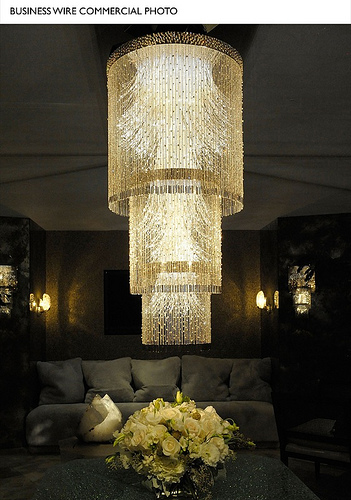
Emmy Chandelier 10,000,000 US Dollars

What financial meltdown says Emmy? Emmy, 60 years old on Sunday, still believes you can't be too rich or too thin. With the addition of a lighting bauble, Emmy is reliving the glory days of when the US economy was strong - Monday, according to Paris Hilton's wrinkly old white dude who is scamming for president. In a bit of anti-programming with poor people losing homes left and right while Hollywood puts the G in GlitzGlam at the Nokia Theatre on Sunday. The Academy of Television Arts & Sciences has Emmy's new 2008 set look for the mixed bag of presenters from decades gone-by dynastic Hollywood and the new-new terminally hip Hollywood. The swag bags are sporting leather, organic body washes and regular righteous bling.

Architectural Digest hired interior cool dude Mark Boone to design the 'green room' for this Sunday's Awards show. Backstage the green room is not really green. This one is blinging posh¹º for all the celebs doing PR. It's a jubilee without cherries, too messy, but heavy on the ten million dollars worth of sparklies which riffraff shall not be allowed to touch without an engraved Emmy invitation into the 625 square foot vault, cough, room.
'You can't even imagine when it's illuminated how spectacular it is,'' says Katherine Rosenberg Pineau, jewelry designer for the Boston
diamond jewelry company Hearts on Fire
, which made the three-tiered chandelier for the Architectural Digest Green Room (and hopes to sell it for $10 million once the show is over).

''We will be offering white-gloves service -- people will be able to put on white gloves and touch it and feel the movement'' of the thousands of round diamonds, she says. (Yes, there will be 24-hour security.)
Hollywood is having quite the week this week. Tuesday, the B man rolled into town and snagged $10,000,000 for Democrats as the B lady birdsonged Happy Days Are Here Again. This weekend Barbra, no stranger to diamonds, can attend a British themed Tea Party held by a bunch of acronyms - BAFTA/LA TV is the host at the InterContinental Hotel. A Bostonian version would involve more active participation - ha! The very obligatory Governor's Ball is held right after the golden lady holding the atom aloft in her hands is given out to all the people with marble mantels or dreams of one. Entertainment Tonight & people magazine are doing a joint gig with high priced performers and lots of china plates filled with tapas. The Pacific Design Center - known around H-town as the Blue Whale, is where HBO is doing a thing. It's all appropriate for a 4 C blinging chandelier though. Carat, Color, Clarity and just Cool.

Some of the most popular posts here have been on fashion! Last year's Emmy review with pictures galore has people still pulling up that post in big numbers. No bling for me - no posts for you because my need for cash makes me do this thing called work - just not in Hollywood style diamond encrusted rooms. As I bring you great fashion snark, the poor house compels me to ask/say/beg/plead for you to drop dollar or two in my PayPal tip jar in the left column or better yet buy a book, DVD or something truly green from Amazon. I will Love bringing the 2008 Emmy's fashion flare and flameouts again! I have to take time away from work to do it, so any & every dollar helps! :-)

Monday, August 4, 2008

More Costly Pills, Less Time Talking

Talking it through, over it or around it is not the first option for more psychiatrists in the 21st century. Pills targeted towards specific areas of the brain, psychometric drugs are the new remedies favored by the shrinking class. Scary on multiple levels, but especially since all the pill residue ends up in the drinking water of innocents with other issues.

Psychotherapy since father Freud has undergone profound evolution with the profession now in a pill revolution. In less than ten years since 1996, psychotherapy has gone from about half of the treatment options to less than 30% with the embrace of the pills. At some level of good or for ill (and of course, capitalistic profit motives), Big Pharma has offered a profuse array of colored pills to all manner of specialties in medicine. Mental problems, here's a pill, is something that has pernicious overtones as emergency practitioners may have no idea what mind altering drug someone is taking or what the effects of mixing certain compounds. But an uglier disturbing truth is its all about the money that the pill pushers make. Same economic truth works for Big Pharma as buying crack on the corner. The person that cuts the inefficiencies in the supply chain and controls distribution makes the most money.

"These trends highlight a gradual but important change in the content of outpatient psychiatric care in the United States and a continued shift toward medicalization of psychiatric practice," wrote Drs. Mojtabai and Olfson.

In an interview, Dr. Mojtabai said financial incentives are probably driving the change.
He said that under typical reimbursement rates, a psychiatrist who conducts one 45-minute psychotherapy session will receive 40% less than if he or she saw three patients for 15-minute medication management visits.
It leads to an awful discussion on medical records. If people know what kind of drug your taking, then its a small matter of inference and deduction as to what internal malady one may suffer from. There has been a huge publicity around medical professionals snooping inside medical records. Prescription Pills make that much easier because they go down so well with the TV marketing campaigns that brainwash so many viewers.
As talk therapy declined, TV ads contributed to an "aura of invincibility" around drugs for depression and anxiety, said Charles Barber, a lecturer in psychiatry at Yale University and author of "Comfortably Numb: How Psychiatry is Medicating a Nation."

"By contrast, there's almost no marketing for psychotherapy, which has comparable if not better outcomes," said Barber, who was not involved in the study.

Read the book, Comfortably Numb: How Psychiatry is Medicating a Nation, then really decide whether the latest pill shortcut is in your best interest. Charles Barber cites several studies and gives some astounding insights as author of this book. The particular title of that book seems to be very popular.

PS Ack! Blogger is freaking out and not letting images upload. will put them in later. I need a pill...

Wednesday, May 28, 2008

Japan Welcomes African Leaders

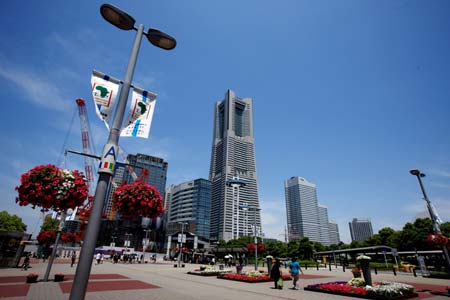
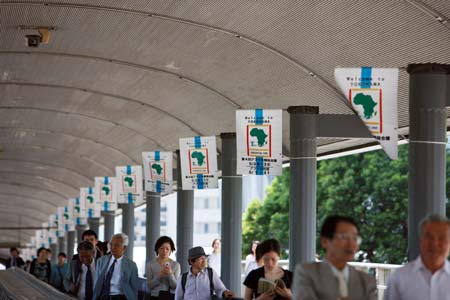
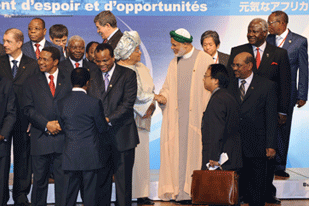
Stark contrasts abound with development minded, economic powerhouse Japan invites Africa's leaders with abundant resources to sit down and chat at the Fourth Tokyo International Conference on African Development (TICAD IV). Actually, the conference is really in the suburb Yokohama in the Minato Mirai 21 district and is only the fourth since 1993. Japan, a closed society, yet first world nation needs to procure resources. The African continent is replete with all manner of resources. Dictators and some well meaning naive African leaders have in the past too quickly signed away mineral rights, water distribution and natural resource development to China and other nation states with positive cash flows, leading to trade inequities. Japan needs to get in line as the price of oil soars or remains unstable. Japan needs more oil and a stream of resources to continue fueling the economy at its current rate. Japan is facing its own debt challenges which have rocked the government in recent months. Hence, Prime Minister Yasuo Fukuda extends the hand of friendship and a basket of aid to counterparts in Africa.
Under the theme "Toward a Vibrant Africa: A Continent of Hope and Opportunity", the meeting is to focus on boosting economic growth, ensuring human security and addressing environment and climate change issues in Africa.

Asia-Africa cooperation, intra-Africa cooperation and public-private partnership are important for the development of the nations. The meeting will serve as a platform for broadening the development partnership.
Japanese Foreign Minister Masahiko Koumura said prior to the meeting that the conference was expected to adopt the "Yokohama Declaration" outlining guiding principles and approaches to African development among the TICAD stakeholders, as well as the "Yokohama Action Plan and the Yokohama Follow-up Mechanism" laying out a road map for action-oriented initiatives with measurable targets.

Japan, at one point in history, has depicted all manner of black folks, among others not ethnically Japanese, with the worst connotations based on race as fully noted by the UN in a 2005 report. Japan now needs Africa's abundant resources to maintain its current quality of life. Africa's leaders, plagued by a surfeit of government workers on the take/dole/corruption path, underscores a desperate need to engineer a means of making money rather than spending it on government to build sustainable economies. All of which, in either case, affect the environment.
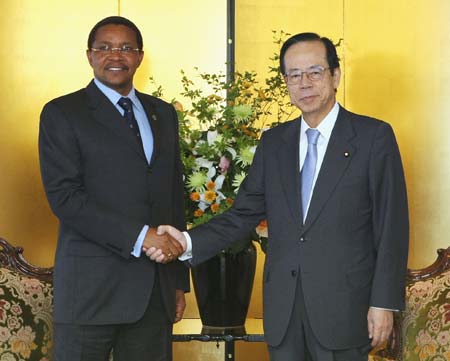
In a few weeks, Japan will host the Great 8 summit in July after a failure this weekend to get those self same countries off the dime to announce a global environmental package. Geopolitical discussions are on the table as Japan seeks more direct influence at the UN. Tanzania, Uganda, South Africa, Liberia, Ethiopia, Angola are among the countries with 39 African heads of state attending the conference. Japan is putting staggering amounts of yen on the table in loan and grants in exchange for development rights which is right in keeping with what the World Bank endorses. The enormous amount of debt each nation is racking up in these deals needs careful consideration. Longtime Africa Champion, by way of Ireland and the south of France, Bono, is ecstatic to see the aid promises, but wants decidedly more done for Africa, especially on the food and agricultural fronts.

Tanzanian President Jakaya Kikwete noted that only about two percent of Japanese imports were from Africa.

"Mr. Prime Minister (Fukuda), this must change. What remains to be seen is increased trade and investment, and more development of the Japanese private sector on the African continent," he said.

Foreign Minister Simbarashe Mumbengegwi of Zimbabwe, which faces intense international criticism, charged that foreign aid policies were slanted to serve political ends.

"The structure of lopsided power distribution in the United Nations system, particularly in the Security Council, is replicated in the development institutions such as the World Bank and the International Monetary Fund," Mumbengegwi said.

Much remain to be done as the value of goods to be traded will be a contentious topic. From Paul Collier comes a book that rips open how the world manages to keep a billion people from the bottom rung of the economic ladder from Asia to Africa. The Bottom Billion: Why the Poorest Countries are Failing and What Can Be Done About It springs from a life time of analysis from a former personage at the World Bank. Staving off a humanitarian crisis is not for the faint of heart and this book chronicles 50 failed states, especially those that sold their natural resources on get rich quick schemes.


Sunday, April 20, 2008

Middle East Theme Parks - An ACME Idea?

As a region, the Middle East comprises architectural and cultural history of humankind since inception while its still prone to violent outbursts by any number of aggrieved parties or grudge bearing nations. Adding a few loud mouth tourists in all the wrong garb with white tube socks is gratuitous next to adding a theme park based on American comics and cartoons in the area. The insurance on a capitalistic enterprise like that has got to be underwritten by a financially healthy firm that treats risk like the expectation of sun heating nearby Arabian deserts. Hooray for Hollywood - here comes their billions earned on the backs of a carrot eating, wise cracking bunny plus a wily coyote charged with babysitting a stalker cat named Sylvester and a yellow bird usually locked in a cage that need a skilled professional negotiator. Jimmy Carter is already booked in the area.


The theme park idea does have a few cha-ching things going for it. Youthful demographics dominates the Middle East. Petro dollars produced a surfeit of surplus incomes for the region's title holders on oil fields. For several years deals have been inked with Viacom/Paramount to do a fun place based on the Titanic and DreamWorks bringing diversity with the lime green Shrek and the lesser known Kung Fu Panda. Time Warner is sticking Bugs Bunny right out there as the front guy amidst an adult beverage Budweiser with Anheuser Busch snagging an island for their use to build a Sea World. Universal is so going to bring it with a giant ape, King Kong and who knows how the whole evolution thing is going to play out in 2012 when Jurassic Park, the T-Rex play park, opens as part of the Dubailand deal.

With their Spidey sense fully activated, Tatweer is the UAE government controlled company jumping on the web of opportunity by signing a mega deal with Marvel. Abu Dhabi already has luxury buildings construction out in the sea dredging up the sea bed to make multi million dollar sand castle islands that can be seen from space, Burj - the world's tallest skyscraper along with a Frigidaire snow & ski resort in the desert. Enter Marvel Comics main man, Wonder Woman sans burkha and a host of other characters to build the economic brand on its own island in the United Arab Emirates. Dubailand contains multiple resorts and facilities with in 3 billion square feet.
Investors, studios and park operators are all aiming to cash in on what some observers call the Middle East's decades-long fascination with American culture. Hollywood movies are popular in the region, and Western fashions are hot commodities among residents who travel abroad.

"On the one hand, they hate America. On the other hand they love America to the bone," said Michael Izady, an expert on Middle East culture who reaches history at Pace University in New York.

The theme park market is open — with no major facilities currently operating in the
Middle East.

The projects are no-brainers for the entertainment companies that have jumped at what amounts to free brand expansions with no capital at risk. Few details have been provided about the deals, which entertainment companies simply describe as licensing arrangements for intellectual property and help on designing the parks and attractions, with no mention of possible royalty payments.

Seems relentlessly pushy American characters, like Captain America, may get benched for the maiden voyage. One of my funniest moments was watching Porky Pig in Italian while on the Via Veneto. There is a time and a place to invite tourists and their bankrolls. But there is a time to say have you lost your mind to companies too. Keep looking for that 'Disney' treatment of Civil War battlefields on Hallowed Ground - Americans said no and they meant it. Too much is not a good thing on the cater to tourist front, especially with certain aspects of American culture deemed corrosive by many in polite Muslim society.


Rami Farouk Daher sets out to look at multiple aspects and implications of tourism throughout the Middle East. As always, scholarship on certain areas is not as deeply discounted for books as American works, but worth it to learn more from perspectives beyond the US. His offering is Tourism in the Middle East: Continuity, Change and Transformation deeply drawing upon his architectural background and familiarity with heritage sites.

Saturday, April 12, 2008

World Rioting Over Food Prices

The UN World Food Program counts 37 countries in dire straits over the unrestrained wildly rising cost of food staples. Part of the global issue is escalating fuel costs, a volatile oil and energy market that continues climbing plus the immense amount of grains being sold to the highest bidders who are biofuel manufactures causing scarcity, which is then reflected in the market as local farmers shop their sought after crops to the highest bidders, not the neediest people. People are taking to the streets venting anger and frustration across the globe stretching the UN's blue helmeted troops to the max.

"I'm surprised I have not been summoned to the UN Security Council, since many problems discussed there do not have the same consequences for peace and security in the world and the human rights of people who need to be fed," Jacques Diouf told a news conference in Rome.

At least five people have died in violent protests against high food and fuel prices in Haiti's capital, while similar disturbances have rocked Egypt, Cameroon, Ivory Coast, Mauritania, Ethiopia, Madagascar, the Philippines, Indonesia and other countries in the past month.

In Pakistan and Thailand, army troops have been deployed to avoid the seizure of food from fields and warehouses.

Politicians kicked to the curb, may be the start of something worldwide as the runaway price of food keeps sneering at stagnant wages. In the wake of violent food riots in Haïti, a frightened sixteen out of seventeen of parliament's senators sent Prime Minister Jacques Édouard Alexis, president René Preval's BFF, packing immediately after a vote of no confidence. Net result, the Hatian government needs to re-form under new management still without an ability to fix the food resource issue when the last person to hold the job was an agronomist. PM is not exactly a job with career longevity.
The clash with senators came just two days after the president of the country of 9 million people -- most of whom earn less than $2 a day -- managed to persuade rioters to end a week of violence in which at least five people were killed.

Stone-throwing crowds began battling U.N. peacekeepers and Haitian police in the south of the country on April 2, enraged at the soaring cost of rice, beans, cooking oil and other staples.
It took just seven mere days in a free market, for a Haitian sack of rice to double in price to an astronomical $70. Now Haiti looks to take $8 off the top price as a sop to an angry populace representing the rickety bottom rung of the economic means ladder in the entire Western Hemisphere. People with nothing left to lose, are becoming more prevalent in the world economy. Many of the riots are occurring in urban setting like Port-au-Prince & Manila leaving conditions in rural locales to the imagination of despair.

In Bangladesh, a mob ten thousand strong, confronted police authorities as they protested rampant food increases. On April 6th, Egyptians made their displeasure heard and felt over the cost of food staples doubling in less than a year. In Sudan, two UN workers delivering food were killed, upping the number to 5 truckers dying to feed the dispossessed.

North Korea is a nuclear beggar nation as they plead for food as their people starve. UN North Korean food experts state they have a shortfall of over 1.5 million tonnes of cereal grains. China, South Korea and the UN try to pick up the slack, but the gap is so large they need additional food suppliers to come to their aid. One million died in the famine of the 1990's and conditions are now beginning to resemble that horror. persistent malnutrition and chronic anemia for nursing moms is prevalent throughout the nation.

Bad weather and its crop destruction, made the UN Food Program issue a warning about Zimbabwe's food crisis as well. Somalia is in full arrest on the humanitarian front, needing aid in numbers not known to much of the western world as the US media especially, focuses on their neverending pursuit of the trivial.

Part of Haiti's continued unrest is outlined in the Pulitzer nominated work from Randall Robinson on Haiti and the Bush administration's 2004 Special Forces coup with now exiled two-time president of Haiti, Jean-Bertrand Aristide. An author presentation of An Unbroken Agony: Haiti, From Revolution to the Kidnapping of A President on C-SPAN was quite compelling as he was on the line to Haiti when Aristede was removed involuntarily from the country under false pretenses by the US & with French approval.

Monday, March 31, 2008

Cubans Allowed to Stay at Hotels - Finally

Finally by imperial decree, the government of Cuba condescends to allow its own citizens the right to stay in hotels they earn their livelihoods in. How generous. Tourists need not mix with the local riffraff was the attitude strictly enforced under Fidel. Cuba, under the hand of almost octogenarian president; Raúl Castro is enacting a series of reforms meant to dispel certain cobwebs that cover aspects of the isolated island's freedoms of associations. Not that a cell phone is a human right, but buying them would produce a new source of revenue for the government from its own cash starved citizenry. (National Hotel in Havana, AP Photo/Javier Galeano)

Castro has enacted multiple reforms since succeeding his ailing older brother, Fidel, on Feb. 24. He has ended a ban on private ownership of cellphones, done away with rules that required farmers to buy materials from state-run stores, voided a rule that forced residents to pick up prescriptions at inconveniently located pharmacies and lifted a ban on purchases of electronics.

The electronics reform, which also goes into effect Tuesday, will let Cubans buy computers, microwave ovens and car alarms, among other items. Several stores were stocking shelves Monday. At La Copa in Miramar, a fancy Havana suburb where many foreign embassies are located, computers were prepared for purchase. Electric bicycles were displayed at Galer¿as Paseo, a store on the Malecon, the avenue that runs along Havana's famed seawall.

The catch of course being who can afford these new swanky privileges with wages dictated by the state, severe price controls and payment for premium services in only cold hard cash. Hotel management is a public-private partnership between the Cuban military and certain international conglomerates. State run stores are mandatory shopping places for many staples in Cuba. Cuba entices rich tourist and their money, but the economy is not set up for underpaid workers to benefit openly from their own industriousness. Havana is one of the priciest tourist spots in the region with tremendously spectacular beaches.

Unfettered access to the internet would be a bridge too far. The real issue is the property rights are temporary in Cuba and wiring homes was not in the top 1,000,000 things to be done under the guise of Revolucion. Human Rights is something China is getting re-educated about as a boycott is fomenting in the wake of its crackdown on Tibet. Cuba doesn't have a military crackdown as much as an economic one that equates to the same evisceration of Human Rights.

Most Cubans are estimated to earn between 400 non-convertible (Cuban) pesos (eg a factory worker), to about 700 (eg a professional) - the equivalent of between $17 and $30, or £9 and £15.

Non-convertible pesos are good for buying the subsidised official rations of rice, cooking oil and other perishable goods.

Tourist Apartheid is the name given to the practice of making the Hotels and their amenities TOURIST areas only. Usually it is Europeans that spend freely at the resorts like Varadero Melia, as they are not under the half-century old sanction issues that US citizens must abide by. The amazing juxtaposition of world class luxury available for those with means residing next to workers who arrive by bicycle or a 1950's made in America car relic as new cars are for tourists and not allowed to Cubans.


Brian Lattell, a former CIA analyst assigned to Cuba & Latin American, writes in his interesting book, After Fidel: Raul Castro and the Future of Cuba's Revolution updated in light of recent events, but still with its major emphasis on Fidel and his despotic rule of Cuba.

Saturday, March 22, 2008

Comic Cat of Anime is Official Diplomat for Japan

Hello Kitty, then Pokémon (Poketto Monsutā) as a Nintendo game, later a movie and TV series, swept the island nation of Japan. The allure and lasting popularity of theses comic and cartoon characters spawned official recognition from Japan that a comic ambassador of their ilk was urgently required on the diplomatic cultural front.

Enter the doryaki (red bean pastry) eating cat Doraemon (b. 1969) to take on the awesome responsibility of making lifelong animé pals worldwide for Japan. The Land of the Rising Sun takes their cartoon cats very seriously, indeed. Hello Kitty is pretty tough to beat in Japan and other Asian markets for branding, but A-list celeb Doraemon is another type of cartoon cat, a giant teal blue one this time, that has special characteristics with wonder gizmos in a stomach pouch and competencies enabling purring pontifications about Japanese animé. Doraemon brooks no competition from American cartoon staples. Doraemon is beating some sixty year old mouse from Disney and a pudgy bear cub with a honey fetish who has a cute ass as a friend with optimism issues for popularity. Duh, from a ten year old Bart can't even beat Doraemon.

Using the political lexicon of the esteemed Joseph Nye of Harvard, Doraemon is using "soft power" to gain trust currency with audiences rather than "hard power" or trade imbalances caused by the sinking US dollar or the tremendous amount of Japanese manufactured goods coming onto the rest of the world's shelves and showrooms. Japan is making a strategic shrewd move and using a comic cat to ensure they touch each generation of consumers of manga or animé. It is a huge market opportunity and comic book readers, gamers and other students of the art form the world over are growing in economic power. Japan is branding themselves as the anime leader to reach out, not in an ordinary flesh and blood boring human way, which would just ruin the relationship effect and the drama of the art form.

In the Doraemon stories, the clever kitty is sent back from the future to live with and help his youthful master, Nobita, a helpless nerd who routinely avails himself of his pet's special powers. Doraemon normally reaches into his tummy-drawer, which is full of magical gizmos, to find something to help his pal out of each new jam - often stirring up new problems in the process. Doraemon stories often pack an educational or moralistic punch, offering lessons about honesty, perseverance, loyalty or history. In Japan, they have been collected in nearly 50 volumes that, to date, have sold some 80 million copies. Doreamon comics have also been translated into dozens of languages from the original Japanese.

Now, Japan's Ministry of Foreign Affairs will dispatch a "human-sized likeness of Doraemon" that will "participate in events hosted by overseas embassies and other diplomatic establishments to help introduce Japanese society and culture" to foreign audiences. (Yomiuri Shimbun) The Guardian's Tokyo-based correspondent reports: "Doraemon's charm offensive will begin with the screening of his hit film, Nobita's Dinosaur 2006, at Japanese diplomatic offices in several countries, including China, France and Spain." At this week's press conference in the Japanese capital, the "feline envoy - whose voice was provided by an actress hidden behind a sliding paper screen - promised to use his roving role to convey 'what ordinary Japanese people think, our lifestyles and what kind of future we want to build.'"

Anime has elements to the final product. It is usually hand drawn with some help from computer programs these days. Giant robots are a popular genre. Manga essentially translates into comics and has a pre-post World War II influence seriously studied. Many popular manga artistes were born in 1949 having a different perspective than some of the other comic artists of today. There are some gender differences in the art form. In 2007, manga or comics drew in almost 407 billion yen or $3.7 billion US, just in Japan. Bringing us back to Doraemon, the helpful ambassador, who is introducing and branding Japanese anime. It is all about the yen.


American audiences may not be as familiar yet, but that is changing. Fujio Fujiko authors this sample of the comic book, Doraemon in Japanese.

And to think you thought my knowledge of comic books was microscopic - Hi Ken!