Showing posts with label Technology. Show all posts

Wednesday, April 22, 2009

Mars, Microbes, Rovers & Kepler

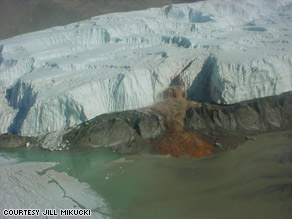
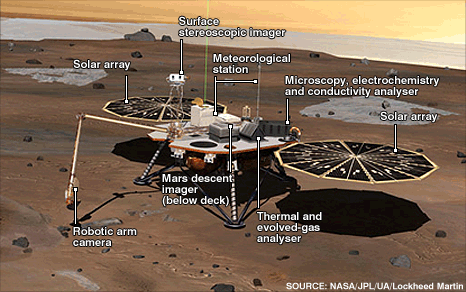
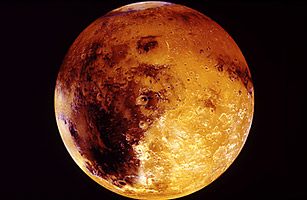
Science is enjoying a renaissance capturing a broken 5 year old Spirit valiantly struggling in the Martian 2009 Spring, million and half year aged microorganisms  making Antarctica's Taylor Glacier look like its been socked in the nose, staining the ice and snow red.   Mars is full of iron deposits and so is Antarctica, but no correlations can be drawn just yet.  But oh the possibilities.  In Antarctica, seawater teeming with life became sequestered as sea levels rose and majestic glaciers formed and gained mass.  Now those same ice mountains are melting and behold, microbes unleashed for the first time from their salt laden frozen blocks.  Yet, the Phoenix Lander Mission to a lopsided Mars found mineral deposits in the soil after baking the samples in the space-age TEGA ovens, leading to the estimation that a veggie such as asparagus could likely grow in the region. 
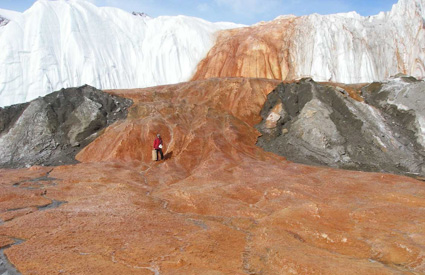
No oxygen in the microbial finds, but life was proceeding apace with one species continuing to split cells and multiply.  Blood Falls, an evocative name that describes the glacier nosebleed is annually a scene of wonder and speculation among the scientific communityWhere else in space is this replicable and mars is one f the first places everyone is considering in the realm of the possible for a bacterial colony like this to exist. (Image Benjamin Urmston)
Mikucki refers to the subglacial pond as "a unique sort of time capsule from a period on Earth's history," but it also has lessons for scientists studying Mars, an entire planet that is in many ways a time capsule too. Mars, like Antarctica, was once warm and wet, but the slow loss of its atmosphere also meant the loss of much of its moisture and surface heat. Still, the place was warm and wet long enough for life to have taken hold — life that would have then had to retreat into underground water deposits and make the same kind of hurry-up adaptation Mikucki's microbes did. Similar adaptive metabolism could be in evidence on the Jovian moon Europa, where a layer of surface ice may cover a globe-girdling ocean.
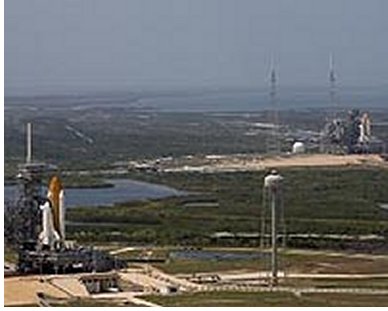
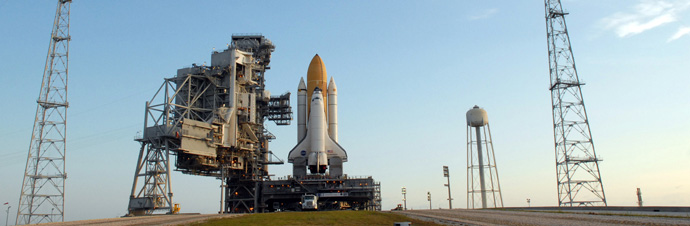
Now Kepler, the planet hunter, has reached its field of study with all the areas gridded for Scientists.  The first pictures came the second week in April.  Kepler's mission is to spot other planets that have possibilities similar to the planet EarthMeanwhile Hubble is still sending back the most amazing pictures of stars in varying stages that are just poetic to see.  Hubble remains without peer and this is the final mission to service the telescope.  As STS 125 gears up on the launch pad, the unusual scene of Shuttles Atlantis & Endeavor being prepped side by side is apparent in this image from NASA.

Endeavor

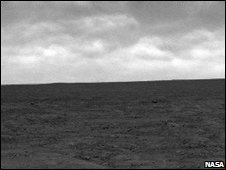
The Rover twins are in various stages of health.  A Martian windstorm cleaned off Opportunity's solar panels leaving the rover to break new ground.  Spirit the wheel-challenged Rover, that discovered the silica, is temperamental when responding to NASA.  Independently, Spirit rebooted its system.  There is no template to say how many times this can occur.  Meanwhile, there's news an earth-sized exoplanet has been spotted in a HZ or Habital Zone in the Gliese system less than 22 light years away.  The true test if when we can ascertain there is liquid water.  We need more powerful telescopes to see that what is in our Milky Way's obscure places.   Science is being treated with more deference now that facts are overwhelming all the naysayers.

(From Kepler courtesy NASA - First Light - The field of study - millions of stars)
Today is Earth day, and those fortunate few who have ridden into space say there is nothing like the view of our shared planet from space.  preserving our existing globe while exploring all that is within out scientific reach in space is the best of all worlds.  Many Thanks to my former senator, the late Gaylord Nelson, for making Earth Day possible and environmental activism probable!

Beyond Earth Day:  Fulfilling the Promise with Gaylord Nelson, Susan M. Campbell and Paul Wozniak.


Tuesday, March 10, 2009

Teachers In Space

Wednesday is launch day, actually night 6:20 pm PDT, for space shuttle Discovery to photogenically blast into the heavens to park at the International Space Station (ISS) with parts for recycling pee into the clean drinkable water machine, a $300 million USD 31,000 pound truss segment to support the additions to the ISS, more items for the solar arrays and two teachers. Discovery's crew has to vacate and finish their spacewalking and scientific chores by March 26 because the Russians booked the penthouse suite with the Soyuz capsule making a grand entrance and bringing a new ISS crew. One space visiting team at a time and there is no place to fill up with rocket fuel in space yet.

More solar equipment means more power to tun the increasingly sophisticated apparatus at the ISS. Recycling urine is important because May heralds doubling the size of the crew from 3 to 6. The US space shuttle program is due to end in 2010. Up to this point there have been a multitude of spectacular successes and tragic failures accompanied by loss of life. Honoring the pioneer of teacher in space, NASA reopened its program for teachers after the 2003 mission failure and two teachers are now fully fledged astronauts hurtling out in maximum G's on STS-119. Those two teachers, Joe Acaba and Richard Arnold, are actually each going to don a spacesuit and go out for a spacewalk. (Discovery photos courtesy Reuters)

Richard Arnold started by teaching college preparatory courses in Morocco, then moved on to schools in Saudi Arabia, Indonesia and Romania. Joe Acaba, an ex-Marine, found his calling in the classroom after a tour in the Dominican Republic with the Peace Corps.

“As an educator,” Arnold said, “you presumably believe in the notion that education can take you anywhere. Here we are. We’re knocking on the door. We’re about to go to space.”

Selected for the space agency’s educator-astronaut initiative, Acaba, 45, began training in 2004 with nine others. 41, and ArnoldNow, NASA has put them on the same shuttle flight.

“We were both surprised when we were assigned,” Arnold said. “I was really happy to be flying with a classmate, and I was really happy it was Joe.”
Watching such a vivid night launch via NASA webcast is going to be fun. The weather forecast looks great barring any equipment failures like the one that scuttled the February 12th launch. Right now the crew aboard the ISS is doing some routine maintenace and spacewalking chores before Discovery arrives on Friday. The space station is nearing completion with all of the cool gadgets like Canada's robotic Mr. Dexter, Japan's Kibo Room (and a Japanese astronaut is on board this flight) and the view of Earth from the ISS space "porch" is said to be unparralelled. What a great teachable moment in science.

Just because I love his books and his whole attitude about science, I will tout Neil deGrasse Tyson's latest wonderful snarkfest in book form, The Pluto Files. It would be the perfect book to take into space when you have some downtime at the International Space Station.


Oh well, the space shuttle seems like its not going anywhere today due to a gas leak. (3/10)


Saturday, December 20, 2008

NASA Finds Carbonate, But Not Funds

NASA found water on Mars with the MIA carbonate minerals giving way to being able to land somebody there for the rest of their lives to colonize the planet in the future. NASA has some skin in the game as a President Obama is going to decide the mission and the money to go into the programs that shape the space race. Right now the president-elect is heavily focused on earthbound scientists who are bit more aghast at Global Warming and the damage incurred by the Neanderthals that were in charge that denied it all. Meanwhile, the head of NASA and his seven degrees got into a snotty spat with the ex-NASA scientist, current head geek of the Obama transition team about the Constellation project and its funding because its way over budget with an end schedule like the number π. Endeavour went up, came down, knowing in about a year nobody from the US is going into space without thumbing a wild ride on Mr. Putin's Russian rockets.

Now its the 3,600,000,000 year old acidic belief system on trial. The Mars Reconnaissance Orbiter by virtue of the Compact Reconnaissance Imaging Spectrometer for Mars (CRISM) beamed back evidence that some spots like the crater Isidis are less acidic and life gain a green toehold. The images are under review as the carbonates would have dissolved or dissapated long ago and not shown up for their Orbiter DeMille-like closeups. What it really means is a tiny step closer to rationalizing a fantastically expensive but scientifically prolific trip to Mars. Manned or unmanned just makes the stakes that much higher because they need a really powerful rocket... Out of the endless loop, comes proof that the mineral is there giving hope that missions even past Mars are possible.
"Carbonate, like the baking soda in your refrigerator, dissolves quickly when exposed to acid," said study leader and Brown University professor Bethany Ehlmann yesterday at an American Geophysical Union meeting in San Francisco.
"So the fact that … carbonate is still present means that the waters flowing through [Nili Fossae] must not have been acid" and could therefore have been conducive to life.

Bacteria and microbes on a meteorite that plopped down to Earth help the hypothesis that life could exist on the red planet. Right now its just a theory that is gaining a foothold as more discoveries are made. The Phoenix Lander and the Energizer twin Mars Rovers have paid for themselves a hundred times over with their discoveries. With each new discovery and scoops full of analyzed dirt more questions arise out of the oxidized red dust. But NASA's next rover that could settle the life (bacteria/microbe) on Mars question, the Mars Science Laboratory rover, is experiencing a two year delay from 2009 to 2011 due to design challenges. That's a big money fix in the works. Spirit and opportunity have taken full effect of the solar panels to beam back photographic evidence. (Photo Opportunity on Mars 2004 NASA)

Now where ever will the financing come from in a totally broke USA to fund the next Rover, Lander, Pathfinder steps? I am sure President Obama will get a group of science money people to find money on Earth to support life on Mars. An international coalition, oh yeah, the International Space -Hotel- Station needs some new bunk beds too. Russia, we'd like to book room for a party of six... Obama is going to find a spare billion somewhere in the name of science and carbonates on Mars.

Passion for Mars: Intrepid Explorers of the Red Planet enlists the imaginations of famous planet watchers to envision what it would be like or take to live there. NASA has finite resources and Mars aficionados are planning to keep the red planet at the top of the list someway, somehow. My guess, some sort of gravitational knowledge pull with a black hole that sucks in the naysayers. Andrew Chaikin writes a biography of the current and future of the red planet that will fire the imagination rockets into our own Habitable Zone in space.

Thursday, October 9, 2008

Dirty Dozen Diseases Plot World Domination

Twelve different dirty microscopic pathogens are gearing up to decimate the world. Their germ fuel to grow stronger, faster, deadlier is Climate Change. Earth is going broke in the financial greed demolition derby, placing a precarious world at risk to prepare against a takeover by a dozen powerful germs. Cash is required to fight the marauding germs to buy and distribute drugs and doctors efficiently into containment zones. People on the move from famine, fighting and fallow farms will just accelerate the spread of diseases as refugee crises take on nightmare proportions. Mix in deadly destruction from desertification, storms and flooding and the germs are rubbing their grubby little cells in glee. Most of the world watches as their money turns into unusable leprechaun gold without apparent appreciation that their health is also at stake as the animal kingdom falls prey. Scarcity makes people antsy and it beckons tin pot dictators to unilaterally take decisions to try and take over the world, especially if a two front war develops in the financial markets and a full scale effort to eradicate spreading diseases or pandemics. Who's military will have the money to stop them?

Animals spread disease. Climate change is altering the bounds of nature and pathogens are mutating while animals, mammals, birds and fowl are being eaten. Wildlife experts are screaming at the top of their lungs while global financial markets have people mesmerized as education hopes and retirement dreams float away in the world's legalized gambling meccas. As food prices skyrocket, a celebratory steak may come from a mad cow and that super special Peking duck may have had bird flu are making the remaining wealthy just as vulnerable. China has made it clear making money comes before public health and safety and that's precisely where America's corporate elite put their business chips to increase management's profits and the almighty bonuses.



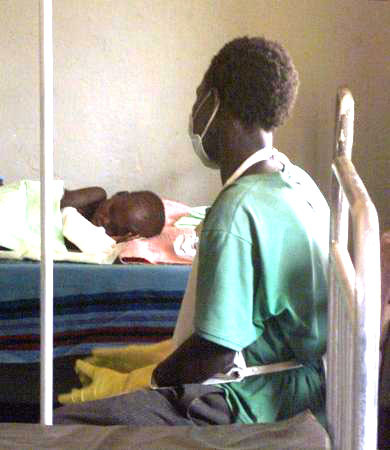
Ebola, Cholera Notice & Avian Influenza
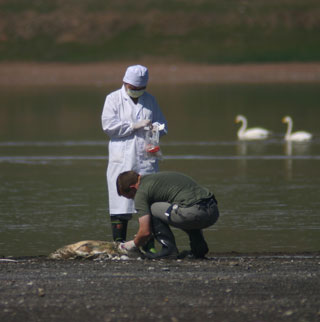
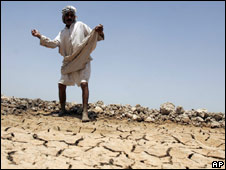
The resource rich continent of Africa is a hot bed incubator for disease outbreaks as the climate changes habitats for humans, insects and beasts of burden. Waterborne diseases will devastate health as well as its scarcity making crops fail and refugee stampedes likely. Standing water attracts mosquitoes which are disease carriers for malaria and yellow fever. China has long been noted as a location of origin for the H5N1 bird flu to morph to a human flu that would make the the Black Death of the Middle Ages or the 1918 pandemic that felled millions seem small in scope. China's algae problem blossomed stinky lime green right before the Olympics in a 100,000 ton fashion, but it the poisonous red algae tides that will kill off marine life and make eating fish a more perilous exercise.
"The term 'climate change' conjures images of melting ice caps and rising sea levels
that threaten coastal cities and nations, but just as important is how increasing temperatures
and fluctuating precipitation levels will change the distribution of dangerous pathogens," said Steven E. Sanderson, president and CEO of the Wildlife Conservation Society (WCS).

"The health of wild animals is tightly linked to the ecosystems in which they live and influenced by the environment surrounding them, and even minor disturbances can have far reaching consequences on what diseases they might encounter and transmit as climate changes. Monitoring wildlife health will help us predict where those trouble spots will occur and plan how to prepare."

The "Deadly Dozen" list - including such diseases as avian influenza, ebola, cholera, and tuberculosis - is illustrative only of the broad range of infectious diseases that threaten humans and animals, according to a WCS release.
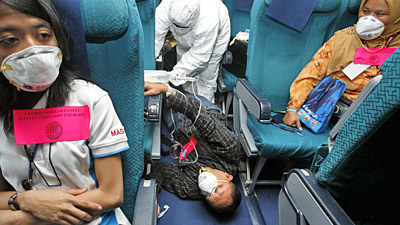
Cholera is a waterborne disease of opportunity from lack of sanitation mixed with water which is prevalent in a myriad of developing countries. Iraq is still suffering from large outbreaks of cholera. Lyme Disease is already in the US and proliferating in the tick community that spreads it to humans. Recently, Malaysia completed a simulation for an outbreak on a plane. Babesiosis is a tropical tick germ that styles itself as a malaria like invasion of the body. Wide eyed raccoons are susceptible to parasites that turn into worms, Baylisascaris procyonis. Animals are our canaries on the Earth mine.


Climate change made clear with charts graphs and analogies that make sense. It draws upon the Nobel Peace Prize winning work of the United Nations IPCC scientific work to make Dire Predictions: Understanding Global Warming a seminal book on the topic. It is a great book to have alongside An Inconvenient Truth from last year's Co-Nobel Peace prize recipient, Al Gore.

Wednesday, October 8, 2008

Mars Lander to Freeze to Death as it Snows


Winter begins its rampage across the red planet. Martian weather is all the nerdy rage as an actual snow storm produced flakes. The Phoenix Lander has no place to hide as the thermometer races downward. Solar power provides its juice, but no blanket, as the original plan had been for a 90 day summer job. Phoenix has had its death sentence commuted twice, from August to September and then through the Martian holiday season. The challenge for Phoenix is surviving long enough to make it through December as the region it is working in is the north polar area. Closer to Mars equator, the almost 5 year old death defying Rover twins, Spirit & Opportunity, are able to power down, hibernate and soak up solar energy for the winter season while the Mars satellite babysitter observes from its orbit. Anything extra was Martian space gravy for the Phoenix scientists studying the planet for signs of life, water and digging for ice. Good thing that the next iteration of a lander, MSL, is going to be the size of an Earth endangered Hummer.
"We're at the mercy of Mars," said Phoenix project manager Barry Goldstein, of NASA's Jet Propulsion Laboratory in Pasadena, Calif.
As winter descends on the Martian arctic, two important things will happen. The sun will sink below the horizon, and "it's going to get cold." said Phoenix meteorological team member Peter Taylor of York University in Toronto, Canada.
Of course, Mars is never warm by Earth standards (it is further from the sun and lacks our planet's thick, heat-trapping atmosphere), but summer above the Martian arctic circle is downright balmy compared to the winter.
It is not even the thick of winter and nighttime temps are -112° F or -80° C. Now that's just freeze your steel parts off cold. But part of the weather phenomenon that has amazed Mars' storm chasers are falling snowflakes, Frosty the Lander style. The Mars Maginot line of death is at 1000 Watt-hours - the minimum amount of solar caffeine needed for the Phoenix to wake up from a frozen nights slumber. There is a race on now between the scientists to get all of their experiments done because no one wants to be the person that has to say it was just this close to proving the first Martian organism that could survive in these conditions before Phoenix freezes solid. No one expects a Lazarus like reemergence come the spring thaw as it will be three months since the sun dropped below the horizon before it peaks over the area again. Lander scientists think Phoenix and Ted Williams styled cryogenic awakening are mathematical improbabilities.

Meanwhile, let it snow, let it snow let it snow. A Martian snowflake caught by a nifty pulsing laser before it ever hit the ground.. Ready sources of red planet water from frost, clouds or in the dirt are important as missions landing people on the red planet need it for survival. Already missions are being drawn up to land astronauts in habitats on the moon in preparation of preparing for a Mars manned spaceflight.
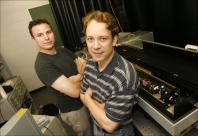
Scientists don’t know yet exactly what Martian snow looks like to the human eye.

"We’ve been trying to capture some snow (on camera) but so far have been unsuccessful," Mr. Dickinson said. "We’ll keep trying. But if we don’t get lucky, that might be something we’ll have to do on the next mission."

The presence of snow means humans might be able to live on the freezing planet.

Of course there is the irony of Canadians finding the snow first...

NASA has laid the ground work for years for a mission. Here is a book they put togther to outline some of the details and challenges for a manned spaceflight mission and what to do one getting off the years long flight pretty much knowing there is no return ticket. The book is The Case for Mars Concept Development for a Mars Research Station: Concept Development for a Mars Research Station - the title pretty much sums up how NASA killed firing up the public imagination on the topic.

Sunday, October 5, 2008

Romanovs Rehabilitated by Russian Supreme Court

Russia gave the literate world creative and human tales of woe that are art and parcel of the classics. The angst embedded in some of the heart shredding tales of Tolstoy's Anna Karenina or War and Peace, Federov Dostoevsky . Three centuries of the royal house of Romanov ruling Russia until the final R's did them in, Rasuptin & revolution. Now, history is being rewritten showing the family of Tsar Nicholas II did not get shot full of bullet holes and their remains placed in vats of acid for merely political showmanship on eradicating Russia of ruinous royalty. They were a royal family with vassals and serfs that received approbation under the new Russian historical standards removing any Russian Who's Who listing them as state criminals.

Bolsheviks lead the execution of the family with jewels of renown the world over. Coronations were lavish affairs. For ninety years Russia denied it was a Bolshevik operation at Impatiev House as just a few minions were involved. The 2008 Russian Supreme Court validated evidence of innocence of the crimes the family was accused of because while under house arrest, their benevolent servants left their posts with the family stashed in the basement on July 17, 1918, allowing the slaughter to take place. The children did not die at first because of the density and plentifulness of the jewels sewn into their garb. During his lifetime Nicholas II gave exquisite bejeweled Fabergé eggs to his wife and the family coffers contained a fair cache of other mint condition precious stones. The jewels allowed the kids to first withstand bullets then knives making some of the assassins get the heebie jeebies as it occurred to them some sort of Divine intervention was happening. After all, the family was directly descended from Ivan the Terrible who went rampaging bonkers when the Tsarina of his dreams died under suspicious circumstances making him suspect them of her poisoning.

The move does not presage any attempt by the Romanov family to reclaim their palaces or regain a foothold in the constitutional order of Russia. But they were delighted nonetheless.

“The protracted rehabilitation process has come to a successful conclusion,” German Lukyanov, the Romanov family lawyer, told the Interfax news agency. “Justice has triumphed.” The case has been fought largely by Grand Duchess Maria Vladimirovna, a senior member of the royal house.

The ruling may not change the lives of the family, but it does represent a milestone: it is the closest that any post-Soviet government has come to accepting the criminal nature of Bolshevik rule.

Westerners may see that as a truism. But present-day Russia is still in the thrall of the iconography of Lenin. His image is emblazoned on schools and underground stations; his embalmed body is still visited in Red Square, even if not by the thousands of Socialist pilgrims who turned up in the Soviet days.

The conspiracy theories surrounding this family are legendary. Church of the Blood is the structure built upon the killing place where the assassinations took place. For years, two bodies were missing leading to many claims they were the long lost prince or princess or their descendants. Another grave was found leading to DNA results aligning with the rest of the now St. Petersburg interred family. Current descendants wanted the stain on the family's reputation removed and the Court obliged. Little Prince Alexei was the great grandson of Queen Victoria reemphasizing the blood ties from all the crown heads of Europe due to all the intermarrying. The books on the Romanovs are fascinating and where Lenin plays in all of this will keep the playwrights, novelists and historians at it for centuries. To have died in a basement after living in the magnificence of the Winter Palace as serfs died in more menial conditions are what fills Russian literature with irony and angst of the human spirit.

To keep up with all the plot twists and their layers of intricacies, including the healing through prayer and mysticism of Alexei by Rasputin who later had horrible incantations against the Romanovs as other royal nobles attempted to murder him, takes a worthwhile book that covers the indelicacies. Author Lindsey Hughes does that quite well in the biographical The Romanovs: Ruling Russia 1613 - 1917.

Friday, August 22, 2008

Coming Soon: Mystery of the Black Hole


Dire predictions, nails bitten to the quick and nerd joy at the prospect of finding and proving some of physics deepest secrets will play out in on computers in a science red carpet moment. In a monster opening box office, September 10th looms large for Doomsday prognosticators, science watchers and CERN citizens will watch with bated breath as the curtain pulls back and a shaky finger pushes the go live button on the world's largest particle physics lab. The Large Hadron Collider (LHC) fires up to smash atoms faster and harder in a cool horror flick kind of way while the search for making Earthly black holes climbs to a new level. There are some nervous nellies freaking out that the world will be instantly sucked into the vortex of a man-made black hole beyond the event horizon to save ourselves from becoming a tossed space particle salad. Somebody wanted to hold the nuts...
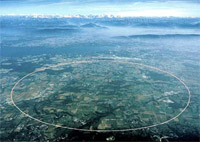
Battle of the Colliders
Much larger CERN versus the older Femilab - may the best atom slayer win....
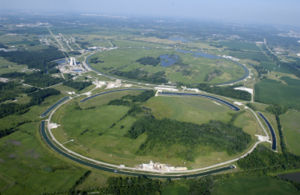
But near Chicago, Illinois, the US Department of Energy's Fermilab is saying, look at us, we have the capacity with Tevatron's 170 giga electron-volts to find the God Particle too, if it exists, except, the European Organization for Nuclear Research or CERN is is the almost $4 billion USD Godzilla of the particle collider realm. Sequels already. It will be a notable international event about who and where the origins of life are found as atom guts are examined ad nauseum. Dark Matter will star as studies and dissertations do mortal combat to prove the existence of other dimensions tearing asunder current belief systems. The Higgs boson has captivated one man for nearly forty years and is one of the remaining theories that the atomic colliders are focused upon. CERN's LHC is brand new.
“We don’t know what we’ll find,” said Abra­ham Sei­den, di­rec­tor of the San­ta Cruz In­sti­tute for Par­t­i­cle Phys­ics at the Uni­ver­s­ity of Cal­i­for­nia, San­ta Cruz, a U.S. par­ti­ci­pant in the proj­ect. About half the U.S. ex­pe­ri­men­tal par­t­i­cle-phys­ics com­mun­ity has fo­cused its en­er­gy on the col­lider’s two larg­est par­t­i­cle de­tec­tors, called AT­LAS and CMS, ac­cord­ing to Sei­den.

LHC is huge in eve­ry way—its size, the en­er­gies to which it can ac­cel­er­ate par­t­i­cles, the amount of da­ta it would gener­ate, and the size of the in­terna­t­ional col­la­bora­t­ion in­volved in it. The pow­er­ful beams of par­ti­cles are to cir­cu­late around the 27-km (16.8-mile) un­der­ground tube at CERN, the Eu­ropean par­t­i­cle phys­ics lab based in Ge­ne­va. Af­ter some test­ing, the beams are to cross paths in­side the de­tec­tors to make the first col­li­sions.


Sci­en­tists say the de­bris from those crash­es—show­ers of sub­a­tom­ic par­t­i­cles—will rev­o­lu­tion­ize our un­der­stand­ing of na­ture. A key hoped-for mile­stone is disco­very of the Higgs bos­on, a hy­po­thet­i­cal
par­t­i­cle that would fill a gap in the “s­tan­dard mod­el” of par­t­i­cle phys­ics by en­dow­ing fun­da­men­tal par­t­i­cles with mass. This should oc­cur by 2010, Sei­den said, if the Higgs ex­ists at all; na­ture may have found an­oth­er way to cre­ate mass. “I’m ac­tu­ally hop­ing we find some­thing un­ex­pect­ed,” he said.

Black holes are delicious Hollywood diva stories waiting for their closeup. The flying spaghetti monster is what nonbelievers called believer's God or Higher Power in the Universe and science is seeing what makes the noodles flop about in space. Touched by his noodly appendage What happens when one or an entire star like the sun is sucked into the stuff of cosmos conflict - only black holes are theorized at the creation/destruction of particle levels.

Dr. Hawkings, the as-yet non Nobel winning brilliant physicist has some strong feelings on the subject. In an interesting newly released book from Stanford professor Leonard Susskind, The Black Hole War: My Battle with Stephen Hawking to Make the World safe for Quantum Mechanics details the intricacies of the arguments between the generalists and the string theory practitioners over the years culminating in verbal fisticuffs over what happens inside a black hole. Buy & Read the book first, the movies always screw it up.

Happiest of Birthday's CJ - the world of science will make many great things probable, but your Faith shall make all things possible!

Tuesday, August 19, 2008

Stockholm Hosts World's Biggest Water Fight


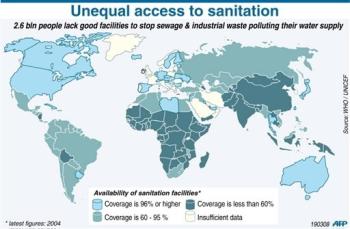
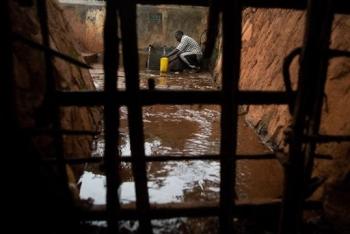
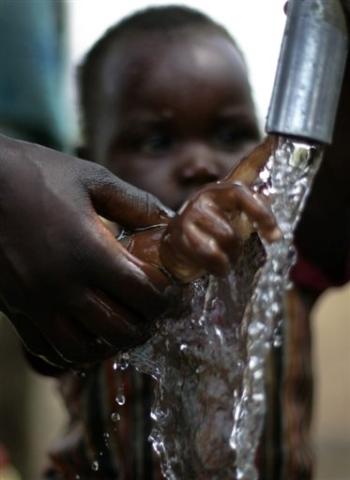
It's another conference about water, mainly everybody's waste water. Much of the world's population, 2.5 billion people go to the bathroom leaving behind much of the water unfit for human use because a toilet does not exist. An epidemic of over 1.4 million kids die all over the world from diseases directly associated with the lack of clean water, year in and year out. Everybody needs to get a little pissed. With over 2500 water experts from 170 organizations debating and discussing the issues of fresh water, sanitation and hygiene in Stockholm, its bound to get a bit tense over a lack of urgency on issues related to water. That is happening at the World Water Week again in Stockholm this year at the annual conference. Most of the globe's population remains oblivious that conservation is about to take over all our lives as water resources dwindle and issues about who controls it makes the world military powers have itchy trigger fingers.
"We've had a luxurious lifestyle during the last 25 years, not caring at all about the environment. It's necessary to change the way people consume, buy, eat," said British professor John Anthony Allan, winner of the 2008 Stockholm Water Prize.

Almost half of the world's population lacks proper toilet facilities, a situation
that can have dire consequences on public health and which poses a challenge to resolve since water is becoming an increasingly
scarce resource.

"Sanitation is one of the biggest scandals of all times. It's something that we have to put on our radar screen," insisted Prince Willem-Alexander of the
Netherlands, who heads up the UN Secretary G
eneral's Advisory Board on Water and Sanitation. (Photo Prince Willem-Aexander)
Biofuel discussions are causing mental meltdowns as many scientists urge people to eat less red meat. Even in the US, vegans versus vegetarians versus carnivores is no joke as animal waste is causing massive food recalls from outbreaks of E coli and other waterborne diseases. Royals are piping up all over the world on food and water issues. Organic farmer, Bonny Prince Charles himself went nuts over genetically modified foods, calling them an environmental disaster and an experiment gone seriously wrong was roundly criticized for his remarks.

The conference will also look at the problem of increasing water stress throughout the world in the wake of global warming, with climate scientists estimating 1.8 billion people will be living in regions with absolute water scarcity by the year 2025. High on the agenda will be the effect human beings are having on the world's climate.

"We have to understand that what we eat and the products we buy have an immediate implication for the availability of the world's water resources," Blenckner said.

Plus this:

A British professor, John Anthony Allan, said the effect of the growing use of biofuels "is too frightening to even begin to realize."

Allan, 71, of King's College, London, was awarded the 2008 water prize for his concept of "virtual water," which measures amounts of
water used in the production of food and industrial products.

He also urged people to cut down on meat consumption, saying it was "bad for the environment."

"Nonvegetarians consume five cubic meters" or 176 cubic feet, "of water per day; your bath is a tiny puddle compared to that. It is the water for food that is the big problem," Allan said. "Be rational and eat less meat."

UNICEF declared 2008 the International Year of Sanitization. In western nations with sewage infrastructure in place, the unpleasantness of being human and the disposal is taken for granted on a large scale. Almost 40% of the world's population does not have the same luxury, leading to shortened life spans and a drain on everyone's resources for aid and large migrations of people fleeing war torn areas as fights over perishing fresh water continue in earnest. Nobody is shying away from the tough stuff at the conference either. India, China and Vietnam regularly use waste water in their agricultural practices. Just don't expect something so important and basic to get carried on the US evening news.

The meeting, which opens Monday and is entitled "Progress and Prospects on Water: For a Clean and Healthy World," will focus in particular on the dangers that the lack of adequate toilets and hygiene facilities presents to 2.6 billion people.

"It's not very popular to talk about toilets and excrement and where to go when you are menstruating. This is something that makes people feel uncomfortable," Stephanie Blenckner, spokeswoman for the Stockholm International Water Institute that is organising the event, told AFP.

Last year's post: World Water Week in Sweden Affects Us All. This year's annual water fest ends 23 August, 2008. Mark your calendar's Global Handwashing Day is 15 October, 2008 for the entire world. Everyone must have clean water to wash their hands.