Showing posts with label Congo. Show all posts

Wednesday, May 28, 2008

Japan Welcomes African Leaders

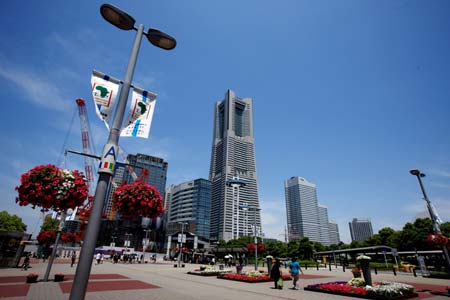
Stark contrasts abound with development minded, economic powerhouse Japan invites Africa's leaders with abundant resources to sit down and chat at the Fourth Tokyo International Conference on African Development (TICAD IV). Actually, the conference is really in the suburb Yokohama in the Minato Mirai 21 district and is only the fourth since 1993. Japan, a closed society, yet first world nation needs to procure resources. The African continent is replete with all manner of resources. Dictators and some well meaning naive African leaders have in the past too quickly signed away mineral rights, water distribution and natural resource development to China and other nation states with positive cash flows, leading to trade inequities. Japan needs to get in line as the price of oil soars or remains unstable. Japan needs more oil and a stream of resources to continue fueling the economy at its current rate. Japan is facing its own debt challenges which have rocked the government in recent months. Hence, Prime Minister Yasuo Fukuda extends the hand of friendship and a basket of aid to counterparts in Africa.
Under the theme "Toward a Vibrant Africa: A Continent of Hope and Opportunity", the meeting is to focus on boosting economic growth, ensuring human security and addressing environment and climate change issues in Africa.

Asia-Africa cooperation, intra-Africa cooperation and public-private partnership are important for the development of the nations. The meeting will serve as a platform for broadening the development partnership.
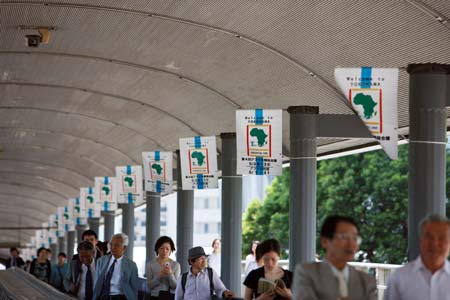
Japanese Foreign Minister Masahiko Koumura said prior to the meeting that the conference was expected to adopt the "Yokohama Declaration" outlining guiding principles and approaches to African development among the TICAD stakeholders, as well as the "Yokohama Action Plan and the Yokohama Follow-up Mechanism" laying out a road map for action-oriented initiatives with measurable targets.
Japan, at one point in history, has depicted all manner of black folks, among others not ethnically Japanese, with the worst connotations based on race as fully noted by the UN in a 2005 report. Japan now needs Africa's abundant resources to maintain its current quality of life. Africa's leaders, plagued by a surfeit of government workers on the take/dole/corruption path, underscores a desperate need to engineer a means of making money rather than spending it on government to build sustainable economies. All of which, in either case, affect the environment.

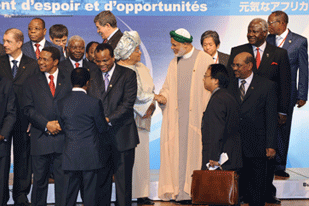
In a few weeks, Japan will host the Great 8 summit in July after a failure this weekend to get those self same countries off the dime to announce a global environmental package. Geopolitical discussions are on the table as Japan seeks more direct influence at the UN. Tanzania, Uganda, South Africa, Liberia, Ethiopia, Angola are among the countries with 39 African heads of state attending the conference. Japan is putting staggering amounts of yen on the table in loan and grants in exchange for development rights which is right in keeping with what the World Bank endorses. The enormous amount of debt each nation is racking up in these deals needs careful consideration. Longtime Africa Champion, by way of Ireland and the south of France, Bono, is ecstatic to see the aid promises, but wants decidedly more done for Africa, especially on the food and agricultural fronts.

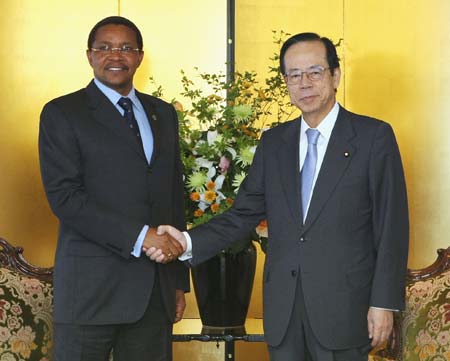
Tanzanian President Jakaya Kikwete noted that only about two percent of Japanese imports were from Africa.

"Mr. Prime Minister (Fukuda), this must change. What remains to be seen is increased trade and investment, and more development of the Japanese private sector on the African continent," he said.

Foreign Minister Simbarashe Mumbengegwi of Zimbabwe, which faces intense international criticism, charged that foreign aid policies were slanted to serve political ends.

"The structure of lopsided power distribution in the United Nations system, particularly in the Security Council, is replicated in the development institutions such as the World Bank and the International Monetary Fund," Mumbengegwi said.
Much remain to be done as the value of goods to be traded will be a contentious topic. From Paul Collier comes a book that rips open how the world manages to keep a billion people from the bottom rung of the economic ladder from Asia to Africa. The Bottom Billion: Why the Poorest Countries are Failing and What Can Be Done About It springs from a life time of analysis from a former personage at the World Bank. Staving off a humanitarian crisis is not for the faint of heart and this book chronicles 50 failed states, especially those that sold their natural resources on get rich quick schemes.


Saturday, April 26, 2008

Malaria Madness

From Abuja Nigeria and the war torn killing fields of the Democratic Republic of the Congo to cash strapped Sri Lanka across a besieged Nepal through Sarangani - a province of the Philippines, one million people drop dead each year from Malaria. A child dies every thirty seconds from the parasitic disease for lack or want of a mosquito net. Ban Ki-moon, Secretary General of the United Nations announced during yesterday's first ever World Malaria Day that he wants resources dedicated to eradicating the malicious disease by 2010. It does have the unfortunate, yet useful acronym of WMD.
Cameroon on Friday celebrated the first World Malaria Day at Nanga Eboko, a small town located at about 170 km East of Yaounde.
In Cameroon, malaria is the topmost cause of morbidity and represents 40% of medical consultations, 23% of hospitalizations, 26% of sick leave and 40% of the annual health budget of households, according to a survey conducted by the National Statistics Institute.
For 50,000 years malaria has plagued the planet and within the last 10,000 years increased its killing efficiency and impacted quality of life. Mosquitoes adapt and ward off man made chemicals like DDT wherein the environment and people suffered long after the spraying when it was used. Because of the prevalence of malaria in Europe until a few centuries ago when the earth cooled in the Little Ice Age, old English written works by a bard, Shakespeare, called it the ague. The advent of increased temperatures and standing pools of water where logging, farming or ranching eradicated forests increase the blood thirsty infected female mosquito population to descend upon people who have moved into these areas. Quinine was the first remedy known to take on the blood disease and those suffering pigmented bodies.

From all over the world, a half billion people suffer an outbreak of malaria each year. Most vulnerable to malaria induced anemia are children and expecting mothers. The number of deaths is pegged at one every thirty seconds just from malaria because many cases are unreported from remote and rural areas. The majority of deaths are in sub-Saharan Africa but on the rise elsewhere in outlying areas of Vietnam. Latent parasites can reside in the liver causing relapses of the disease years later or certain types cause chronic malaria. Mental impairments occur from the raging high fevers induced by the disease's onset in children. The United Nation's leader wants the tropical disease, malaria, eradicated globally in less than a thousand days.
Children who are younger than 5 are particularly exposed to the disease. Protecting them is essential. A program is expected to be launched in the fall to immunize children.

"This treatment is part of a new preventive strategy," said
Cheikh Sokhna, of the Development and Research Institute. "It will be
applied to 100,000 children who live in high-risk zones."

The new treatment has been largely financed by the Bill and Melinda Gates
Foundation, which donated $3.9 million. It has already yielded spectacular results in the town of Niakhar, where the mortality rate from malaria decreased by 86 percent. "The aim is to see whether this can be repeated on a larger scale," Sokhna told Agence-France Presse.

"I am convinced that people can live with malaria without dying, thanks to better access to health care," said Sokhna.


Randall Packard studies the history of malaria and its origins from very surprising beginnings. The book winds its way through the complexities and scope of the challenge to outlining some global policies to finally start eradicating this malicious and pernicious disease. The well recommended book from the John Hopkins Biographies of Disease series is The Making of A Topical Disease: A Short History of Malaria.

Saturday, April 5, 2008

Zimbabwe, Mugabe & the Next Deadly Temper Tantrum

African dictators are no different than Pakistani, Cuban, European, Iraqi or an American one. Especially after contested elections or coups where High Courts install and affirm their chosen leader. Robert Mugabe, Zimbabwe's Roman Catholic president, is using the Court to keep the opposition from seeking transparency in last week's election results. There are threats from Zimbabwe to purge the election commission. George W. Bush used the Court to attempt to confer legitimacy on his presidency. In either case, the will of the People of many nations goes unheeded, leading to a collapse of the ability to govern with moral authority, but always expressing the power of because I say so to get something done.

The 84 year old leader of the Zanu-PF party, Robert Mugabe, has no ability to now cloak himself in legitimacy either, after an election threatening to subsume Zimbabwe into more violence. Two foreign journalists and an American activist are under arrest. The Movement for Democratic Change or MDC opposition demands an election runoff against the Zimbabwe African National Union-Patriotic Front with UN supervision.

During Robert Mugabe's rule/reign he has touched little that can be called successful with the lone exception of enriching his cronies, families and increasing his hold on the levers of power by crushing minority groups - tens of thousands of Ndebele civilians perished under orders from Mugabe's North-Korean trained 5th Brigade and the infamous persecution of homosexuals, incluing the former President Banana - then, raiding the treasury to start a second war in the Congo. All to familiar now, to Americans too.

Mugabe has ruled since his guerrilla army helped bring about an independent Zimbabwe in 1980, but his popularity has been battered by an economic slide that followed the often-violent seizures of white-owned commercial farms in 2000.

With inflation in Zimbabwe raging at more than 100,000 percent, authorities introduced a new bank note denominated at 50 million Zimbabwe dollars Friday, state media said. The new note is worth $1 at the widely used black market trading rate and can buy just three loaves of bread.

While official results from the March 29 presidential election still had not been released, independent observers earlier projected a runoff, saying Tsvangirai won the most votes but not the 50 percent-plus-one majority needed for an outright victory.

The election commission announced more results Friday in races for the 60 elected Senate seats, with the opposition winning 23 to the ruling party's 20. (emphasis mine)

The police/militia/Mugabe's enforcers are now out in riot gear in the quiet capital city of Harare. Africa's colonial and other Imperial powers have greedy hands of responsibility in this as well. Rhodesia's white rule maintained by the Brits are part of the underpinnings that set up the pathological corruption dynamic. The World Bank touted Mugabe's successes in the mid-1990's, but has piped down considerably in later years. America went strangely quiet on Mugabe's antics and escapades amidst his legendary human right abuses. Kenya is still dealing with the violent aftermath of their presidential elections with the ruling junta using the Court to immediately validate a dubious election result, ringing in the New Year with a Kenyan killing field.

Resource rich Africa is the prize in a race for exploitation from every corner of the globe while its suits each nation's purposes to prop up corrupt regimes and ignore rampant inflation and unbacked currencies. If anyone is preparing a legal brief for a host of charges in the Hague, those that were silent and watched should be held complicit or as accessories responsible in Mugabe's reign of terror too. The gorgeous photo is from Victoria Falls in Zimbabwe.

The Last King Of Scotland earned a well deserved Oscar for Forest Whitaker's portrayal of Uganda's unstable Idi Amin. The harsh reality of Idi Amin and his capricious barbaric practices were not internalized, meaning the world is doomed to repeat the same lesson with an elderly malevolent dictator like Robert Mugabe that started out as a freedom fighter with a promise of leading the insurrection against forced Imperial White rule. Martin Meridith describes the beginning and the sordid final chapters of the Mugabe presidential era in Robert Mugabe: Power, Plunder and the Struggle for Zimbabwe's Future. Recent events will make an interesting postscript for this book.


Wednesday, September 12, 2007

Grim Outlook for People and Gorillas

Blazing speed is of the essence and many times not nearly fast enough for containment in hard to reach areas, to stop the spread of such an indiscriminate killer. It strikes fear in the hearts of international health professionals, rural dwellers and experts with just the mention of its name, Ebola. Somewhere between half to 80% of those infected, die a horrible, pain ridden death. It is confirmed that people are perishing in central Congo, particularly Kinshasha, from a new outbreak of Ebola.

"The symptoms last between five and seven days," he added.

People in the province, as in other parts of the country, are at further risk of contracting the fever due to the lack of observance of safe practices in the handling and disposal of dead bodies.

Two of the victims of the latest outbreak were pastors who came into contact with infected patients in their churches, according to Kanow.

The fever was first recognised on 8 June after the deaths of two village chiefs. Subsequently, all those who assisted in the burial also died, Kanow said.

According to Makwenge, health teams had been mobilised at the local, national, and international level to help deal with the outbreak.

Ebola outbreaks in the Congo in the recent past have drawn swift reactions from the United Nations, World Health Organization (WHO) and the US Center for Disease Control (CDC). A deadly pathogen believed to have originated in Congo in 1976, killed 300. No one knew what is was during that initial outbreak. Now, the horrific pathogen commands fierce respect and is studied in laboratories with special protocols and equipped facilities where even the air is filtered differently while scientists are hooked into space suits. Ebola has no known cure and does not respond to antibiotics.

Gorillas are horribly endangered to the point of extinction in Congo. Ebola is decimating their populations as well on top of the indiscriminate poaching, brutish civil wars and extreme decimation of their natural habitats. (photo AP)

The Western Gorilla's main subspecies — the Western Lowland Gorilla — has been decimated by the Ebola virus, which has wiped out about a third of the gorillas found in protected areas over the last 15 years.

"In the last 10 years, Ebola is the single largest killer of apes. Poaching is a close second," said Peter Walsh, a member if IUCN's Primate Specialist Group, told the AP. "Ebola is knocking down populations to a level where they won't bounce back. The rate of decline is dizzying. If it continues, we'll lose them in 10-12 years."

Female gorillas only start reproducing at the age of 9 or 10 and only have one baby about every five years. Walsh said even in ideal conditions, it would take the gorillas decades to bounce back.

The illustrious Jane Goodall, the primatologist, has made preservation and conservation her life's work. Her groundbreaking Institute is celebrating thirty years of outstanding contributions to humans and chimpanzees alike. In 2003, she released The Ten Trusts: What We Must do to Care For The Animals We Love.

To frighten you right out of your socks and wits about the deadly Ebola and Marburg viruses, read Richard Preston. His books, Hot Zone: A Terrifying True Story (Ebola/Marburg) and The Demon in the Freezer (smallpox stashes) are informative, the narratives chilling and true, but they will keep you thinking long after you put the book down about what virus is floating around us and how fast it can spread causing an epidemic that could easily spin out of control. Ebola is a worst case scenario. Marburg happened in Virginia.